Chapter 2#
Robert Berry 1729–1814#
Robert Berry OC came to a part of Granville County, North Carolina, which was soon to become Orange County, NC. We know that he built a small cabin in the northeast corner of his staked out land. This cabin was documented in Robert Berry’s OC Entry for his Land Grant. Thomas Bradford owned the land just north of Robert Berry’s OC claim.
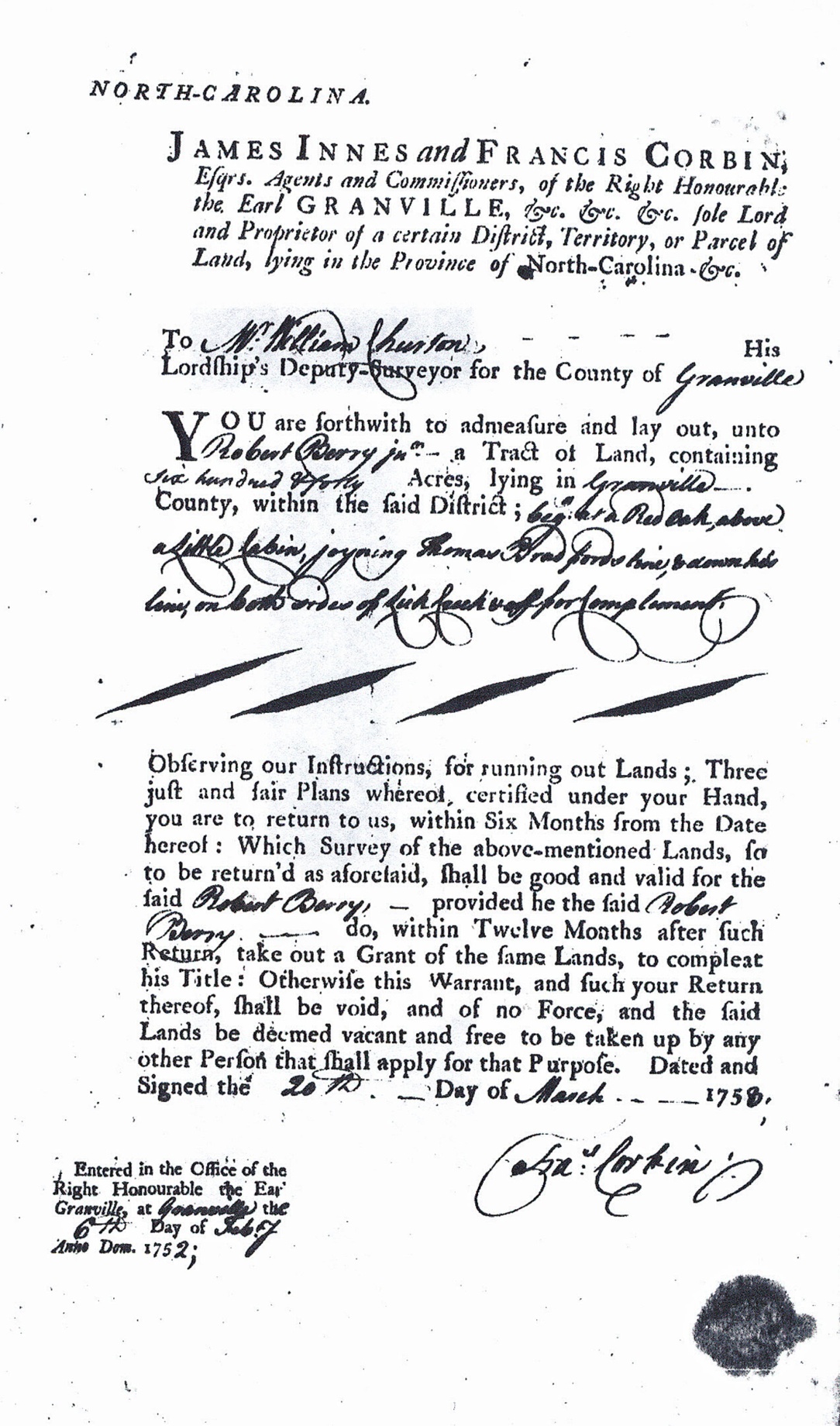
On February 6th, 1752, Robert Berry OC made entry in Granville County, North Carolina, for the land he had homesteaded. (Fig. 17, Pg. 69)
2 September 1756 Richard Holeman Survey 384 acres on Quarrel Cr. waters of Flat River joins James Dickens, Bradford, Thomas Bradford, Wade (or Weldon); Archillas Wilson, Charles Moore: SCC. Entered 4 Mar 1754 (by James Taylor)
16 September 1756 Archillas Wilson Survey 283 Acres on Quarrel Creek, joins Richard Holeman, Philemon Bradford; Richard Holeman, Charles Moore: SCC
NOTE: Quarrel Creek and Lick Creek are mentioned in the Sale of 200 acres of a 400 acre tract owned by Thomas Bradford to Philemon Bradford on page 64.
Thomas and David Bradford are sons of Philemon Bradford
Princess Anne County, Virginia, Deed book 1 page 30 December 14th 1692: Isabella Spratt, widow of Henry Spratt and eldest son Henry Spratt to Lancaster Lovett 200 acres in the Western shore. Witness: Job Kemp: William Bradford, Francis Simpson.
We do not know if William Bradford in Virginia is related to Thomas Bradford or not but William Bradford definitely knew the Kemps and the Lovetts. We also don’t know if the Bradfords are related to Robert Berry OC but David Bradford was living close to Robert Berry OC in the 1757 Orange County tax list (Fig 11 page 6, Pg. 51 in this book)
From the 1755 tax list, we know that Robert Berry OC was not alone in the wilderness. He had friends and relatives who came to North Carolina with him from Princess Anne County, Virginia. We know for sure Robert Berry OC was acquainted with the Cate family. This was proven by the fact that Thomas Cate acted as chain carrier on Robert Berry’s Land Grant Survey in 1753. (See Fig: 18, Pg: 70). Thomas Cate was probably John Cate’s brother.
Robert Berry OC married Elizabeth Cate, John and Margery Lawrence Cate’s daughter, sometime about 1757. No marriage records were kept until 1785 in Orange County, North Carolina. Robert Berry’s Land Grant Survey was done on December 3rd, 1753, and John Cate’s Land Grant Survey was done the very next day on December 4th, 1753. Thomas Cate, who was a chain carrier for John Cate’s survey and Robert Berry’s survey, was probably Elizabeth Cate’s uncle.
John Cate wrote his will on January 6th, 1785. He willed property to his granddaughter, Ann Pryor, and his daughter, Margery Pryor. He gave a cow and a calf to his daughter Elizabeth Berry. John Cate also named his son, Joshua Cate, and his grandson, Joshua Cate Junior, in this will. He named Joshua Pryor as a grandson. Nancy Griffith was also named as his daughter. John Pryon would have been his son-in-law. The will was probated in the July court, 1785. The executors were his youngest son, Thomas Cate, and his son-in-law, John Pryor. The witnesses were Lyle Robinson and Joseph Cozart. Margery Lawrence Cate must have died before 1785, because John does not mention her in his will.
Our Robert Berry OC was granted his land grant on May 12th, 1757. He was identified on the document as Robert Berry Jnr. (Fig: 18, Pg. 70) The fact that he was a junior would mean that his father’s name was also Robert Berry. This is further circumstantial evidence that Robert Berry’s OC parents were Robert and Mary Williamson Berry from Princess Anne County, Virginia.
I have not found a deed for the sale of the Robert Berry home and farm that Robert Berry inherited from his father. I do not know how or when Robert Berry disposed of his property but from all indication Robert Berry OC had adequate money after arriving in North Carolina. Robert Berry OC was an enterprising and ambitious young man and appeared to exploit every opportunity he encountered. After saying all of this about the man, it still appears that Robert already had money when he came to North Carolina.
Our Robert Berry OC never seemed to have a problem paying his quitrents. Money was scarce and many of Robert’s neighbors were having problems paying their taxes and quitrents. This was happening a lot in Orange County around 1780 and was one of the main problems that led to the Regulator Movement. A lot of business was done by the barter system and about the only cash available was obtained by selling farm products, furs etc. that were shipped back to England. It was very hard for local farmers to raise money as a result. Taxes and quitrent were a very real problem and many planters lost everything because of the lack of hard cash and a few crooked politicians and sheriffs. Robert Berry OC apparently had what it took to succeed because he continued to prosper throughout his entire life. More than likely, Robert raised hogs, cattle, sheep, tobacco, corn, wheat, and flax. The animals could free range and required very little feed or attention, especially in the summer months. Robert probably also did business with the fur traders. Deer skins and bear skins would bring in cash. Small animal skins were also in demand. I know that in the 1930’s my grandfather, Wiley P. Berry, sold small animal skins that he had trapped in Lick Creek and other streams around Fiddleton. It makes me wonder if the skill of trapping animals for their fur was passed down through my Berry family from Robert Berry OC to my grandfather.
In 2006, Dane Berry, Bernard Berry, and I explored the original Granville Land Grant property and located a foundation of a cabin that measured about 20 by 30 feet. This site was located near the very center of his original Land Grant. It is thought that this was Robert’s plantation home from about 1757 until he built a much larger two story Plantation Home in 1766.
Public records show very clearly that Robert Berry OC was a valuable member of his local community. He served on several juries in Hillsborough, even though it was about 14 miles and a almost day’s ride from Fiddleton. The first official record I have of Robert Berry OC was the entry he made on February 6th, 1752, in Granville County, NC. (Fig. 17 Page 69) The warrant was issued in Granville County, and the survey and Granville Land Grant were issued in Orange County, NC, which was finally granted five years later on May 12th, 1757. (Page 77)
When William Churton ran the survey in December of 1753, he started at the southeast corner of Thomas Bradford’s property. Robert Berry’s little cabin was very close to that point in the northeast corner of his claim. This cabin site has not been located at this time, but we know about where it would have been. (See Fig. 20, Page. 73)
The instructions given to William Churton in the Warrant read: You are forthwith and layout to Robert Berry Jnr. a track of land containing 640 acres lying in Granville County in the said district “beginning at a red oak above a little cabin, joining Thomas Bradford’s line. Assemble lines on both sides of Lick Creek (unintelligible word) for complement”. There is a lot of information connected to this document. In order to acquire a Granville Grant several steps had to be followed. The first requirement was that an improvement had to be made on the property in question. Second there was the Entry and then the Warrant. The next step was the survey and the final step was issuing the grant. Robert Berry’s OC survey and the grant records were recorded in Orange County, North Carolina.
As a prerequisite to allowing a homesteader to make an entry for a Granville land grant he must make an improvement on his land. This improvement was usually a crude one-room cabin that would serve as the planter’s first home. After the Land Grant was made, the planter had to pay quitrent, which was specified in the grant document. In Robert Berry’s grant, he was obligated to make a quitrent payment in the spring and the fall. The number of acres granted to the pioneer, or planter as they were called, determined the size of the payment. This quitrent for Robert Berry’s grant was set at three shillings for every hundred acres of land granted. This quitrent was to be paid yearly on the 25th day of March and the 29th day of September in equal portions. Robert Berry’s yearly rent amounted to ten shillings, five pence. His quitrent was to be paid to John Earl Granville or his heirs.
Many years went by before the Entry and the Warrant were found in the Granville County records. This happened because Orange County was split off from Granville County in the middle of Robert Berry’s OC Land Grant process. My thanks go to Dane Berry, who was visiting North Carolina for the 2007 Fiddleton reunion. Dane and I were searching for records in The North Carolina Genealogy Library in Raleigh, NC. It was Dane who suggested that we look at the Granville County records. I had been searching for these records for many years and had overlooked the fact that Orange County was being formed at the same time Robert Berry OC was Land Grant was being processed. This is where we found the two missing records. Robert made his Entry in February, 1752, and Orange County, NC, was formed in May of 1752. The Warrant was not issued until March 20th, 1753. (Fig.17, Pg. 69). The actual survey was made 9 months later on December 3rd, 1753.
Please note on the survey document shown in (Fig 18, Pg. 70) that the name of our ancestor was Robert Berry Jnr,. This was always confusing to me because both Robert Berry Jnr. and Robert Berry appeared on at least three different documents. In the land Grant survey his name was recorded twice and both times he was referred to as Robert Berry Junior. In the actual land grant document that was issued on May 12 1757 his name was entered as Robert Berry Junior five times and Robert Berry once. After studying over this for many years it now seems obvious that Robert Berry’s OC father was named Robert Berry. After Robert Berry OC named his son Robert Berry Junior, around 1860, Robert Berry OC never signed another document with the junior prefix again. This practice of dropping the junior prefix after naming a son Junior was an English naming custom.
If a family is following the English naming pattern, the first son is named for the paternal grandfather. The first daughter born to the family would be named for her paternal grandmother. The second daughter would be named for her mother. The second son would be named for the maternal grandfather The third son would be named for an older brother. Robert and Elizabeth Cate Berry did adhere to this English naming pattern.
In our Robert Berry OC family their first child was a daughter and she was named Mary Berry. This is a strong indication that Robert Berry’s OC mother was named Mary. If Robert Berry OC is indeed the son of Robert Berry PAC, then his mother was Mary Williamson Berry and his grandmother was Mary Kemp Williamson. The first son was named Robert Berry Jr. for his paternal grandfather, Robert Berry PAC. The second son was always named after the maternal grandfather and in the case of our ancestor, the second son was named John Berry. Elizabeth Cate’s father was John Cate. The third son, Joshua Berry, was named after his maternal uncle, Elizabeth Cate’s brother, Joshua Cate. Elizabeth Berry, their second daughter, was named for her mother, Elizabeth Cate Berry. All the other children were named without regard to any known relatives. They were Isaac Berry, Thomas Berry, David J Berry, William Berry, and Henry Berry.
Can you imagine what it would be like to go into a virgin forest and carve out a plantation consisting of 500 acres of land, have five children, build two cabins and a plantation home within a span of 15 years? This was done without roads, stores, doctors, drug stores, hardware stores, hospitals, electricity, modern electrical tools, power tools, modern building material, building supply stores, architects, pickup trucks, or schools. In addition to all this effort, enough food had to be raised to feed the family, feed the livestock and feed their slaves. This operation was equivalent to a small factory. This required remarkable ingenuity and perseverance as well as a lot of hard labor. In addition to all of this, Robert Berry OC served on jury duty in Hillsborough and was engaged in the road building effort of Orange County. Robert Berry OC was appointed overseer of the roads on two different occasions by the court. He served as a chain carrier for several of his neighbors and worked on the road under other overseers. Robert Berry OC was only thirty-seven years old when he built his plantation home in 1766. He had lived under British rule forty-seven years before the Declaration of Independence was signed in 1776. In spite of the fact that he functioned under the British rule for all those years, he chose the side of revolution as a patriot and enlisted in the North Carolina Continental Line to fight for independence from England. This had to be a trying time for all of the planters and farmers in North Carolina. From the English viewpoint, all of the Patriots were traitors. In reality, Robert Berry OC and his neighbors had been virtually independent for twenty-five years even though they were living under the English rule. They managed their own plantations as they saw fit. I suspect the prospect of living in a free country where they could rule their own destiny had a lot of appeal. This would have been especially true in the remote areas of the state. Our ancestor was isolated and as long as he met his financial obligations to the tax collectors, he was probably allowed a lot of freedom. I also think he knew the tax collectors very well and it always helps if you know the right people.
North Carolina was also granting more land to the men who enlisted in the army of the North Carolina Continental Line. This was a brilliant action on the part of the newly formed State which had very little money. The State was taking land from the loyalists who were supporting the British and giving it to the citizens who chose to fight on the side of the revolution by enlisting in the Army.
Granville Grant Land Survey Dec 3rd, 1753
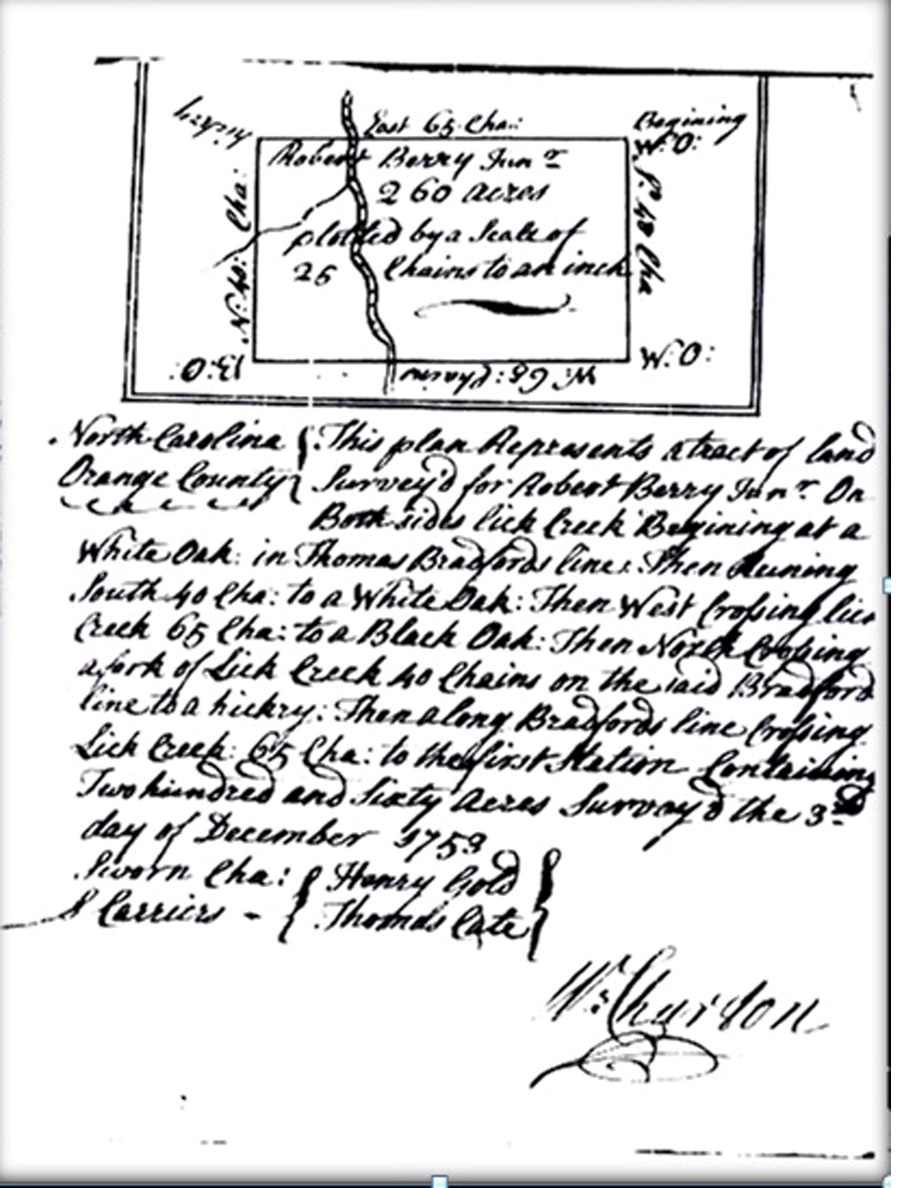
The chain carriers listed on the survey map are Thomas Cate and Henry Gold. Thomas Cate was probably John Cate’s brother. John Cate’s survey was done the very next day on Dec. 4th, 1753. John Cate had a son named Thomas Cate but he was the youngest son in the family.
It should be noted that William Churton signed the survey map. William Churton was the principal designer of the city of Hillsborough and chief surveyor for Lord John Carteret, Earl of Grandville, land grant office. Henry Gould (Gold) and William Churton are listed in the 1755 Tax List.
Robert’s Granville Grant Property Survey Description#
Robert Berry’s property was described as being on both sides of Lick Creek adjacent to Thomas Bradford’s property line. The survey started at a White Oak tree in Thomas Bradford’s line on the east side and ran south, west across Lick Creek, then north and back east along Bradford’s line.
Several of Robert Berry’s neighbors owned property close by including Thomas Bradford, James Murdock, William Armstrong, and members of the Wilson and Robinson families. Most of these men are listed in the 1755 Orange County tax list.
From the November 1777 road building order, we learn the names of the men who worked the road: Thomas Rountree, James Allison, William McKee, James Murdock, Moses Gwinn, John Murdock Sen., John Wilson, Archibald Wilson, William Wilson, William Robinson, William Armstrong, Robert Berry, Michael Robinson, and Daniel McMahan.
Most of these men were also listed in the 1755 tax list, so although there seemed to be vacant land available, all of the men reporting to Thomas Rountree were living close enough to be considered neighbors.
Robert Berry’s Granville Land Grant GPS Readings#
NW Corner = 36°13'54.52"N 79° 1'31.58"W SW Corner = 36°13'28.37"N 79° 1'31.58"W
Alt SW CORNER = N 36, 13’ 25.4" W 79, 01’ 07.8" SE Corner = 36°13'28.37"N 79° 0'39.16"W NE Corner = 36°13'54.52"N 79° 0'39.16"W
Cabin Location N 36 13’ 38.4 W 79 01’ 08.7"
Cemetery Location (White marker with black star)
N 36 14’ 07.3" W 79 01’ 30.8"
Thomas Bradford Property Lay to the North of Robert’s First Grant
1757 Granville Grant and 1780 Grant Google Earth#
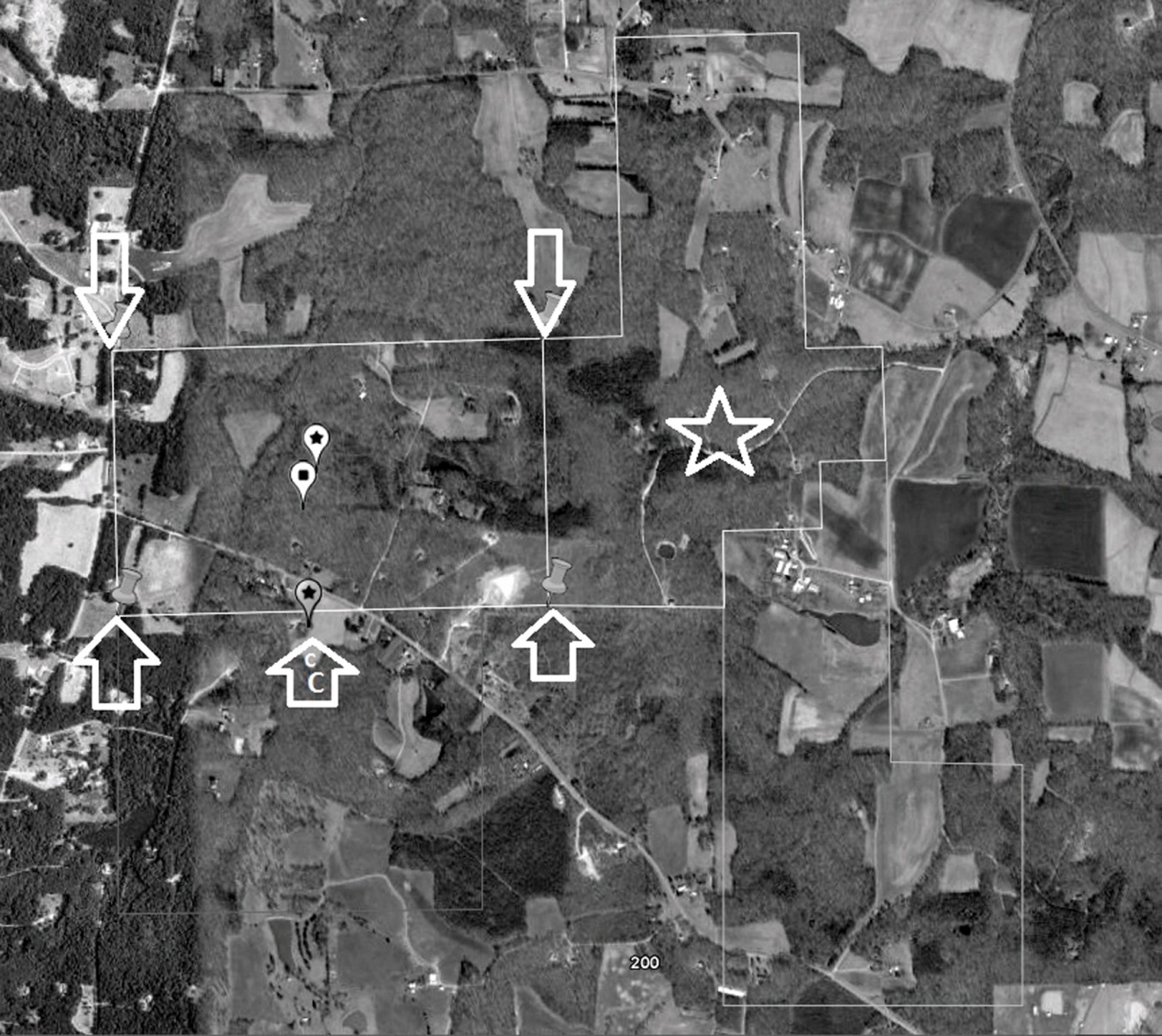
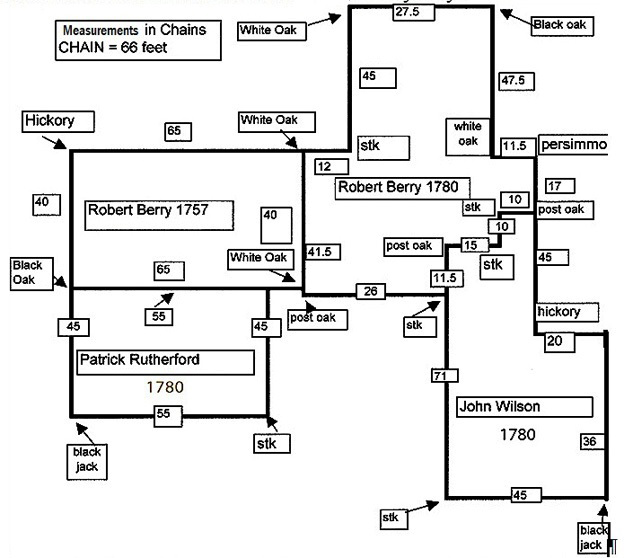
On the map in Fig 20, the corners of the original Granville Land Grant are marked with white arrows. The arrow with the C in it marks the chimney. This landmark is all that remains of the Fiddleton Plantation Home which was built in 1766. The white balloon with the square is the location of the original family cabin. The balloon with star marks the site of the Robert Berry Fiddleton family cemetery where 23 of our ancestors are buried. The tract of land with the white star was granted to Robert Berry OC in 1780. Robert sold most of this tract to William Armstrong on October 14th, 1800. (Deed bk13 Pg.330) The crossed Arrows on this map joining Robert Berry’s OC newly acquired property was granted by North Carolina to the Wilson Brothers in 1780.
The State of North Carolina required an oath of allegiance when an application was made for the North Carolina Grants in 1779. This land was being made available as an incentive to enlist in the North Carolina Continental line.
The newly formed state had no money and paid the Patriots with pay vouchers and land grants. Some of the land granted in 1780 had been confiscated from the Tories. This would have been considered treason only a few years earlier, but North Carolina was no longer an English Colony after 1776.
The settlers who migrated into the central piedmont from Maryland came through the Shenandoah Valley of Virginia. They were largely of Scottish descent. Many of these settlers lived very close to Fiddleton. They were friends and neighbors of Robert Berry OC and his family. Neither Robert Berry OC nor any of his children were members of Little River Presbyterian Church. This religion was brought to America by the Scots and the Scot-Irish. The Presbyterian followers were very devout in their belief and regularly attended their churches. This fact alone leads me to believe that Robert Berry OC was not from Scotland and much more likely to be English.
Robert and Elizabeth raised ten children to adulthood and he and his wife lived very full and long lives. They were both born around 1730 and Robert died in 1814. Elizabeth must have died around 1816. Only four of their adult children remained in North Carolina. They were Joshua, Isaac, Elizabeth, and Henry. One of William and Hannah Cate Berry’s sons, Thomas Person Berry, and his family remained in Orange County. Mary, Robert Berry Junior, John Berry, Thomas Berry’s family, David J Berry family, and William Berry all settled in other states.
Victor Glenn Berry did an excellent job in his book Wagons South Wagons West identifying and tracking one of the descendants of William and Hannah Cate Berry. Most of Glenn’s book dealt with William Clarence Berry, who migrated from North Carolina to Alabama and later to Texas. Victor was a descendant of William Clarence Berry.
Victor Glenn Berry, a descendant of William and Hannah Cate Berry’s son William Clarence Berry, had traced his family back to Orange County, North Carolina, and to Robert Berry OC. Unfortunately, Victor Glenn Berry accepted David Edgar Berry’s research connecting our Berry family to Scotland. Victor also believed that Thomas Berry in Orange County who died in 1771 was Robert Berry OC’s father. I have no idea who the Thomas Berry who died in 1771 is related to, but there is nothing that I’ve been able to find to connect him to our family. I am truly sorry that I never met Victor Glen Berry before he died. We could have shared information and his Orange County information would have been much more accurate. I highly recommend his book if you can find one. I have a copy and will use much of the Alabama & Texas Berry family information from it.
I have met a good number of Robert Berry OC descendants over the Internet and in person. Many of them have developed family trees and researched their own branch of the Robert Berry OC family. Our cousins were at different stages of their research when we first met. By combining our information, we were able to fill many gaps, which continued to improve the reliability of our data. Once Y-DNA testing began in our family, we were able to verify our own family connections without checking every family in America who had a Robert, John, William, Thomas, Henry, Isaac, Joshua, or David Berry in their tree. Almost every Berry family in America used these same given names. This had made genealogy research of the Berry family very difficult. In the early days of our research and before we started testing Y-DNA, all of us thought that we would eventually trace our families to one Berry family. This is far from being true. At the current time there are 239 Berry participants, there are 21 separate identified families, and 46 Berry men who are not related to any of us.
We have found that by studying family members who lived in close proximity to each other, we could identify parents, cousins, in-laws, children, nieces, nephews, aunts and uncles. This was very true of the first three or four generations of pioneers who settled America. We were able to locate such family groups in Princess Anne County, Virginia; Orange and Person Counties, North Carolina; Fayette County, Alabama; Cobb County and Henry County in Georgia; Wayne County, Tennessee; Rusk and Burnett Counties in Texas. By the time the fifth generation of a family were pioneering ever westward, the groups of family members became smaller, because some of the older family members had become well established where they were living. It was usually the younger members of the family who left home in search of new opportunities in land ownership. The migrating parties often included a lot of families who may come from the same community but were not directly related to our Berry family.
I created a Web Page, www.berrytree.org, to share our Robert Berry family with descendants and the interested public. I am cognizant that the Web Page will not last forever, so this is my reason for writing this book.
Robert Berry OC apparently named his plantation Fiddleton. The name of the plantation is noted on a map drawn by George W Tate at the Bingham School in 1891. The location of this note on the map corresponds to the actual location of Robert Berry’s Granville land Grant. The name Fiddleton is another clue that Robert Berry’s OC family came from England. There is a town named Fittleton located in Wilshire County, England. (See Fig.9 Page 40)
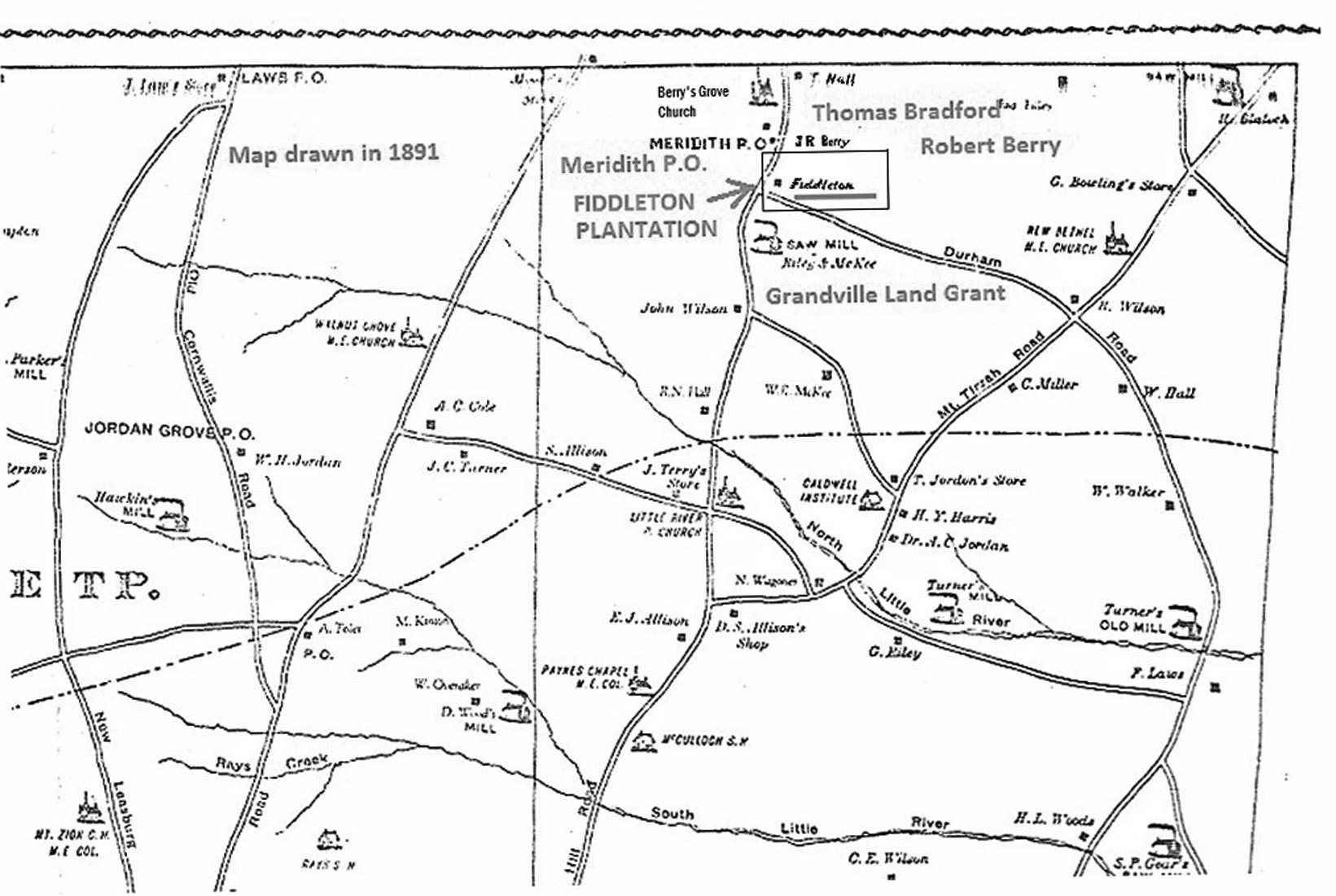
The only other known reference to Fiddleton was stated by Elizabeth Peed Berry, Thomas Person Berry’s third wife, in an affidavit involving his property that was left intestate. The lawsuit was filed by the five orphan children’s grandmother, Martha Brown. The children became orphans when Thomas Person Berry died on April 30, 1884. Elizabeth Peed Bowles Berry gave a very detailed description of the Fiddleton property in her testimony at the trial. She also mentioned that a splendid apple orchard was located in her dower.
Robert Berry’s Granville Grant Document Transcription#
This Indenture, Made the Twelfth Day of May in the Year of our Lord, One Thousand Seven Hundred and Fifty Seven BETWEEN the Right Honorable John Earl Granville, Viscount Carteret, and Baron Carteret, of Hawns, in the county of Bedford, in the Kingdom of Great-Britain, Lord President of His Majesty’s most Honorable Privy Council, and Knight of the Most Noble Order of the Garter, of the one Part, and Robert Berry Junior of Orange County in the Province of North Carolina Planter of the other Part. WHEREAS, His most Excellent Majesty King George the Second, in and by a certain indenture, bearing Date the Seventeenth Day of September, in the Eighteenth Year of his Reign, and in the Year of our Lord 1744, and made between his most Excellent Majesty*,* of the One Part, and the said John Earl Granville, (by the Name, Stile and Title of the Right Honorable John Earl Carteret, ) of the other Part: DID, for the Considerations therein mentioned, Give and Grant, Release, Ratify and Confirm, unto the Said Earl, (by the Name, Stile and Title of the Right Honorable John Earl Carteret, as aforesaid,) and his Heirs Assigns forever, a certain District, Territory, or Parcel of Land, in North-Carolina, in America: and all the Sounds, Creeks, Havens, Ports, Rivers, Streams, and other Royalties, Franchises, Privileges and Immunities within the same, as they are therein set out or described, allotted, and granted, and confirmed, to the said John Earl Granville, as aforesaid for One Eighth Part of the Charters granted by King Charles II, in the Fifteenth and Seventeenth Years of his Reign, to Eight Lords Proprietors of Carolina, as by said Indenture, duly enrolled in the High Court of Chancery in Great- Britain, and in the Secretary’s Office in North-Carolina, Reference being thereto had, will more fully appear. NOW THIS INDENTURE WITNESSETH, That, as well for, and in Consideration of the Sum of Ten Schillings Sterling Money, to the said John Earl Granville, in Hand paid by the said Robert Berry at or before the Sealing and Delivery of these said Presents, the Receipt whereof is hereby acknowledged, and also for and in Consideration of the Rents, Covenants, Exceptions, Provisos, and Agreements herein after mentioned, reserved and contained, and by, and on the Part and Behalf of said Robert Berry junior his Heirs and Assigns, to be paid, kept and performed, he the said Earl HATH Given, Granted, Bargained, Sold and Confirmed, and by these Presents, DOTH, from himself, and his Heirs Give, Grant, Bargain, Sell and Confirm, unto the said Robert Berry junior his
Heirs and Assigns forever, all that Tract or Parcel of Land, situate, lying and being in the Parish of St, Mathews in the County of Orange in the said Province On both sides of Lick Creek Beginning at a White Oak: in Thomas Bradford’s line. Then running South 40 cha: to a White Oak: Then West crossing Lick Creek 65 chn: to a Black Oak: Then North Crossing a fork of Lick Creek 40 chains on the said Bradford line to a Hickory: Then along Bradford line Crossing Lick Creek 65 Cha: to the first station. Containing in the Whole Two hundred Sixty Acres: All which said Premises are more particularly described and set forth in Plan or Map thereof, hereunto annexed together with all Woods, Underwoods, Timber, and Timber Trees, Water Courses, and Privileges of Hunting, Fishing, and Fowling, in and upon the Premisses, and all Mines and Minerals whatsoever therein to be found, excepting and reserving always, out of this present Grant, and to the Kings Most Excellent Majesty, his Heirs and successors, One Fourth Part of all the Gold and Silver Mines, to be found in and upon the Premises; and also, excepting and always reserving thereout, unto the said John Earl Granville, his Heirs and Assigns, one Moiety, or half Part of the remaining Three Fourths of all such Gold and Silver Mines: TO HAVE AND TO HOLD the said tract or Parcel of Land, and all and singular of the Premises, with their Appurtenances, (except as before excepted) unto the said, Robert Berry junior his Heirs and Assigns for ever YIELDING AND PAYING therefore, Yearly, and every Year, unto the said John Earl Granville, his Heirs and or Assigns, the Yearly rent of Ten Schillings and Five Pence which is at the Rate of Three Schillings Sterling, for every Hundred Acres, and so in Proportion for the less Quantity, at or upon the Twenty-fifth Day of March, and Twenty-ninth Day of September, in every Year, by even or Equal Portions; and to be paid at the Court-House for the said County of Orange unto the said Earl, his Heirs or Assigns, or to his or their lawful Attorney, or Deputy Receiver for the Time being the first Payment thereof to be made on such of the aforementioned Day of Payment as shall first happen after the Date hereof and the said Robert Berry Jun. For himself his Heirs and Assigns, and for either and every of them Both hereby Covenant, Promise, and Agree, to and with, the said Earl, his Heirs and Assigns, and to and with either and every of them, by these Presents, in a Manner and Form following: That is to say, That Robert Berry his Heirs or Assigns, shall and the Time being, on the Days, and at the Place aforesaid; the said Yearly Rent or Sum of Ten Schillings and Five Pence by half Yearly Payments, as aforesaid: Provided always, and Present Grant is hereby expressly Declared and Agreed by and between the said Parties, to be nevertheless UPON THIS CONDITION, vis. That if it shall happen that this said Yearly Rent of Ten Schillings and Five Pence or any part thereof, shall at any Time hereafter, be behind or unpaid for the space of Six Months, next over or after any or either of the aforementioned Days of Payment (and no sufficient Distressed can be found on the Premissis, to levy such Rent and Arrears, with the full Costs, Charges, and Expenses in making the same) That then, this present Grant, and Assignments thereof, shall be utterly void, and of none Effect: and it shall be lawful for he said Earl, his Heirs and Assigns, to re-enter into the said Lands, and to re-grant the same, to any other Person of Persons whomsoever, as if the Grant and such Assignment thereof, had never been made. IN WITNESS whereof, the Parties above-named, have hereunto set their Hands and Seals, the Day and Year first above-written.
Signed, Sealed, and Delivered his
In the Presence of Us, Robert R Berry
W Churton mark
Robert Berry OC Granville Grant Transcription
Robert Berry’s OC grandson, Thomas Person Berry had built a house on this west half of this property in 1852 and was living there when he died, intestate. The house in the picture below was built by Robert Berry OC after being in Orange County, North Carolina, for only 15 years.
On Page 76 in the description On both sides of Lick Creek Beginning at a White Oak: in Thomas Bradford’s line. Then running South 40 cha: to a White Oak: Then West crossing Lick Creek 65 chn: to a Black Oak: Then North Crossing a fork of Lick Creek 40 chains on the said Bradford line to a Hickory: Then along Bradford line Crossing Lick Creek 65 Cha: to the first station.
This Same White Oak is mentioned on (Page 64) Philemon Bradford his heirs executors administrators and assigns one tract or parcel of land containing two hundred acres lying on Quarrell Creek it being the one half or moiety of a greater containing four hundred acres. Beginning at a white oak near Lick Creek
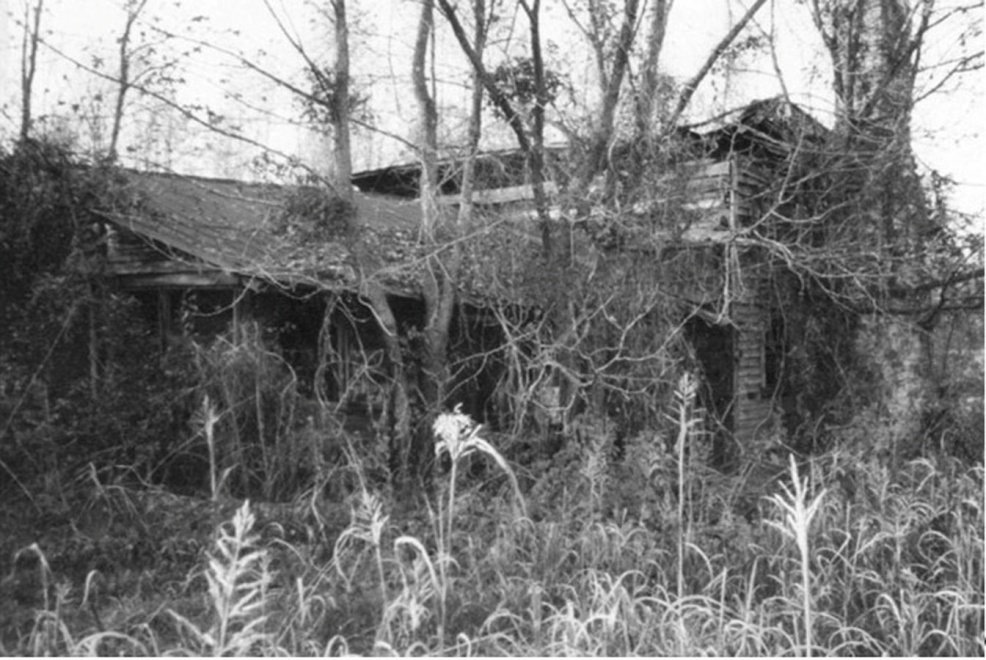
Robert Berry built this house in 1766 near the southern property line of his Granville Land Grant. These pictures were taken before 2007 and they are the only known pictures of the plantation house before it was destroyed. The house was donated to the Chapel Hill Fire Department to be burned in a training exercise.
Burning of a Pre 1776 National Treasure
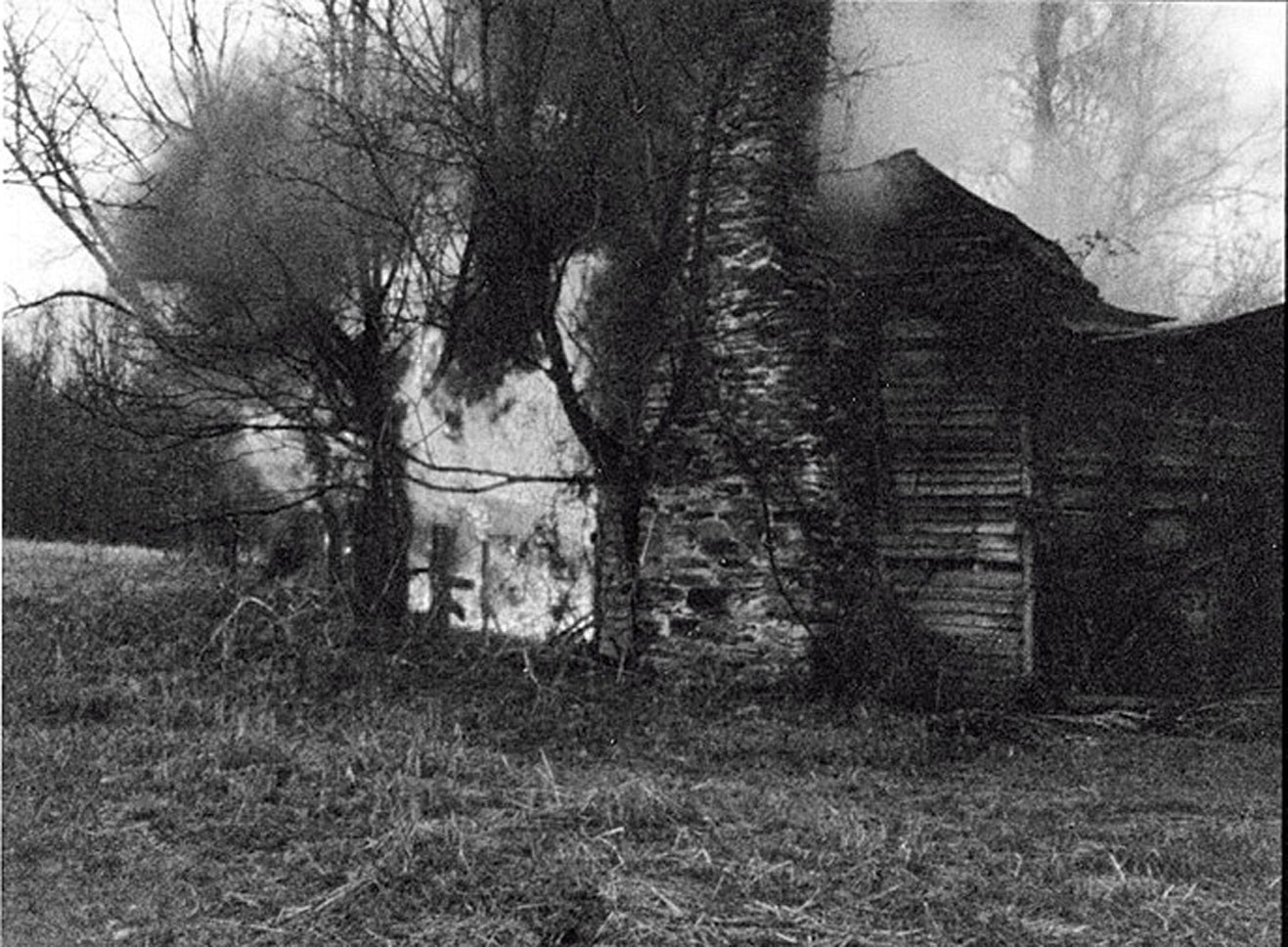
I wish I had known about this house while it was still standing. I have been by it many times in my lifetime but nobody in the family ever talked about who built this house. I am not sure anybody in the family even knew this information. Some boards were taken from this house by the present owner’s brother and were used in his home in Greensboro, North Carolina. I have never met him or seen the wood. This grand old plantation house was the home for 12 of our Berry ancestors and the activity there must have been equivalent to a small factory. Food had to be provided for 66 meals each day, 36 meals for the family members and 30 meals for the slaves. The slaves most likely prepared their own meals in their cabins. This still amounted to about thirty six meals a day to be cooked for the family in their fireplace. Most likely Robert and the older boys had to hunt for wild meat three or four times a week. The younger children would pick wild fruit, berries, and nuts in season. In addition to all this work, cows had to be milked and butter churned. Water and wood also had to be transported from the well and the woods for the kitchen. Many other chores had to be completed every day. This was a very hard life but also a very healthy one. As it was mentioned earlier, there were fruit trees on the plantation which provided a lot of fresh fruit that could be dried and stored for the winter as well as eaten during the summer and fall. Wild honey was also probably plentiful and was used to sweeten cake, pies, and other desserts.
There were water driven grist mills to grind the wheat and corn in the community. There were water driven sawmills and plenty of timber to produce planks and beams by 1766. There is a real possibility that some of the Cate family owned some of these mills. It is a known fact that there was a Cate mill located on Flat River at some point in time. Before I became interested in genealogy, I often wondered why or how any normal person could enter uncharted territory and face the dangers that were prevalent at that time. It totally amazes me at how quickly the new planters and settlers managed to create entire self-supporting communities in a wilderness.
What even amazed me more was to find out that my fourth great-grandfather Robert Berry OC was one of these people. The other thing that surprised me was how many people came to America on those little wooden ships in such a short period of time. The three months that it took to come from England to America was fraught with disease, crowded conditions, pirates, and storms at sea. You have to wonder how bad conditions must have been back home to make them take so much risk. Or was it the desire to own property, make a life for themselves as individual farmers, planters, and entrepreneurs the driving force.
For planters and settlers living at the edge of civilization for so many years, it is small wonder that the British had any hope of maintaining control of the American colony. In reality, I suspect that the people in Britain had no concept of what life would be like because none of them ever experienced a life like this. The wealthy did not do any work and the poor did the work but did not reap the benefits of their labor.
The long growing seasons in the South, the rich soil, and the vast number of huge trees and other large quantities of natural resources available created conditions that were ideal for so many occupations and successful plantations. Once an individual has lived an independent life and been successful, he would never ever want to return to a society such as the UK provided in the sixteenth, seventeenth, and eighteenth centuries.
We have every reason in the world to be proud of our ancestors and what their efforts made possible for us over the past 400 years.
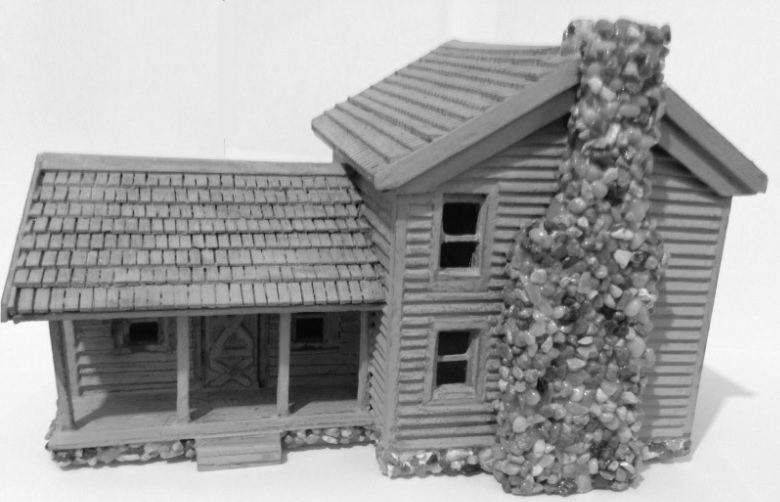
This is a picture of a model of Robert Berry’s OC 1766 Fiddleton Plantation Home. This home was built only 15 years after our ancestor arrived in North Carolina. When Robert arrived in a wilderness of virgin forest and un-cleared land he proceeded to carve out a small plantation. Can you imagine what it would be like to achieve this much success in 15 short years under those conditions? This house had glass windows and about 900 ft. of floor space. It had wood floors while many of his neighbors only had dirt floors and log cabins about one third the size of this plantation home. It is obvious that Robert had money in order to purchase the glass alone. Glass was either manufactured in Virginia or England. Glass would have had to be transported by horseback from Virginia no matter the source. Most likely the glass was manufactured in Jamestown, Virginia, where the craftsman had become proficient in manufacturing glass products. The window sashes themselves had to be handmade and were likely made possible by Robert’s training as a carpenter under the internship of Samuel Hollowell. The wood required to build the structure was plentiful at no cost except the cost of the labor used to shape it into building material at the saw mill.
At least five of Robert and Elizabeth Cate Berry’s youngest children were born in this home. On the page 78 (Fig:23) you can see the remains of this building being burned by the Chapel Hill fire Department. We are very fortunate that the owner of the property had the foresight to take these two pictures. The only thing that remains of this wonderful historical monument is the chimney. On the left-hand side of the back of this chimney between two stones the date 1766 is scratched into the mortar. This was most likely done by Robert Berry himself.
It is believed that Robert Berry OC sold the home that he inherited from his father and brought the cash with him when he left Princess Anne County, Virginia, and came to Granville County, North Carolina, in spring of 1751. In reality, the parcel of land that was granted to him by the Granville land grant became part of Orange County in May of 1752.
The actual location of the Fiddleton plantation house is near the southern boundary of the land grant property. This boundary joined the property of Patrick Rutherford whose plantation Robert Berry bought after Patrick died. The plantation home was located on the east side of Lick Creek and approximately halfway between the East and West property lines. Robert Berry’s OC first home was probably a conventional log cabin with a dirt floor. A cabin site was located near the center of the property by Dane and Bernard Berry in 2005. Robert and Elizabeth Cate Berry’s first five children were born there. Both the small cabin Robert Berry OC built for himself when he arrived in North Carolina and the second one was probably converted to slave quarters after he built his new plantation home in 1766.
It is known that there was an orchard on the west end of the property near the road leading from Caldwell in Orange County to Roxboro in Person County, North Carolina. Robert Berry and his neighbors built this road during the winter months when they were not tending crops on their plantations. The road is now identified as North Carolina Highway 157.
To put all of this in proper perspective you have to realize that this home was built ten years before the Declaration of Independence was signed. I have no way of knowing how much of the thousand acres he accumulated during his lifetime would have been under cultivation.
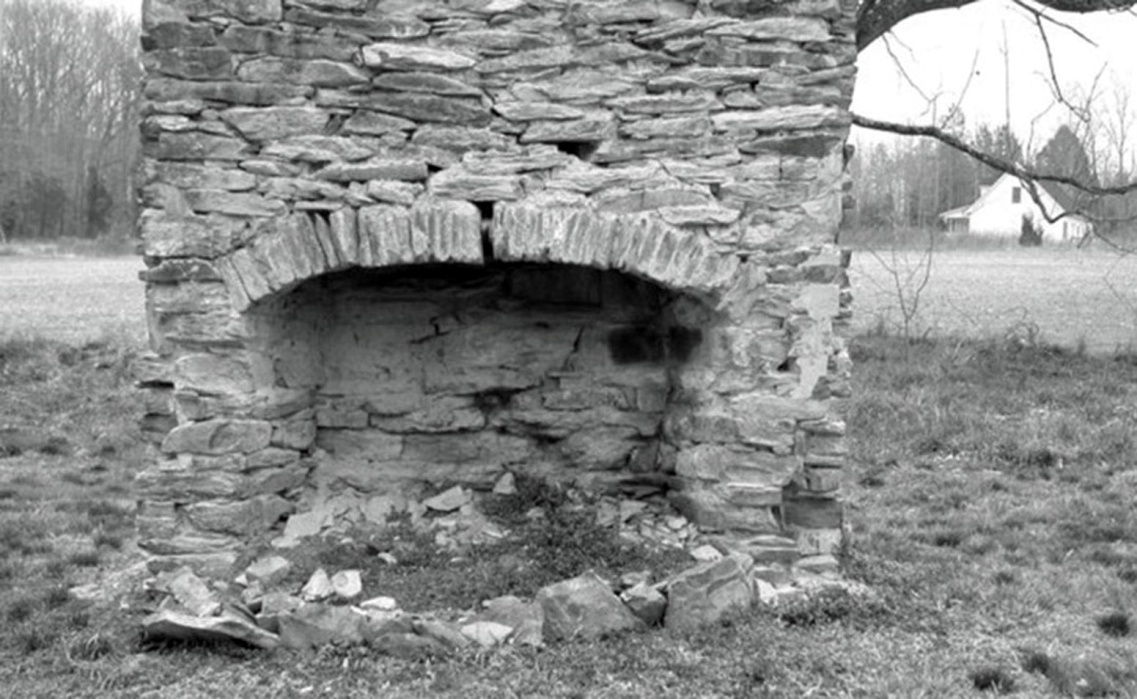
Children of Robert and Elizabeth Cate Berry#
Mary Berry born cir 1758 died about 1795 in South Carolina
Robert Berry Jr. born cir 1760 died cir 1845 Fayette County, Alabama
John Berry born cir 1762 died cir 1804 Jackson County, Georgia
Isaac Berry born cir 1764 died cir 1845 in Orange County, N.C.
Joshua Berry born cir 1766 died October 8th, 1838
Elizabeth Berry born cir 1768 died 1815 in Person County, N.C,
Thomas Berry born cir 1770 died cir 1810 in Tennessee
David J. Berry born cir 1773 died October 3rd, 1837, in Georgia
William Berry born cir 1774 died 1860 in Tennessee
Henry Berry born 1776 died 1855 in North Carolina
These are the children who warmed their hands, feet, and backs by this fireplace on many cold winter nights. Food was prepared here 24/7, three meals a day, summer and winter.
By knowing that Henry Berry was born in 1776 and subtracting two years between the births of each child, I was able to determine the approximate ages of all of the children.
Year Born Robert’s Age Elizabeth’s age
1776 Henry Berry 47 43
1774 William Berry 45 41
1772 David J. Berry 43 39
1770 Thomas Berry 41 37
1768 Elizabeth Berry 39 35
1766 Isaac Berry 37 33
1764 Joshua Berry 35 31
1762 John Berry 33 29
1760 Robert Berry Jr. 31 27
1758 Mary Berry 29 25
NOTE: I may have Isaac and Elizabeth reversed.
The order of their births was determined by using the English naming pattern, when each of them was married and by the estimated marriage date of their parents. There was a total of 18 years from the time Mary Berry was born until Henry Berry was born. If Elizabeth Cate Berry was born in 1733, she would have been 25 years old when Mary Berry was born and 43 years old when Henry Berry was born. These calculated birth years seem very reasonable. The first child, who was Mary Berry, would have been born in 1758. Robert Berry OC got his Granville land Grant issued on May 12th, 1757. This would have been a logical time for him to get married and start a family. I have no information indicating that any of the children were twins. We know that Robert Berry OC was a single man in 1755. (Fig: 11 page 51) I tested this method using known birth years from my father’s family of 14 children and it proved to be very accurate.
The 1800 census was the first year that any attempt was made to identify family members. They listed the number of individuals in one of several age brackets. Robert listed one male between 16 and 25 years old. This would be Henry Berry, because he was born in 1776. Isaac Berry was visiting somewhere else when the 1800 census was taken. Robert listed himself in the over 45 age bracket. Robert was probably 71 years old at the time. On the female side of the census form he listed one female under the age of 10. This would have been his granddaughter, Mary Berry, who was 8 years old at that time. Also listed was one female, between 25 and 45 age bracket, his daughter Elizabeth’s actual age was 32, and Robert’s wife, was listed in the 45 and over bracket. Elizabeth Cate Berry was probably 67 years old.
The ages for all of Robert and Elizabeth’s children may vary slightly from the table on page 83, but not by very much.
Elizabeth Cate Berry would have been 81 years old when her husband, Robert Berry Sr. OC, died in 1814. Considering how many women died at childbirth in those days, Elizabeth Cate Berry must have been a very strong and healthy woman to raise 10 children to adulthood and live to the age she did. Since many women don’t usually bear children after the age of 50, the women dying of complications due to childbirth were usually very young. My fourth great-grandmother on the Wilson side of my family also raised 10 children to be adults. She lived to be about 90 years old. My Wilson family was also in Orange County in the mid 1700’s. The Wilson Family did belong to the Little River Presbyterian Church and many of them are buried there. The Wilson surname is in Clan Gunn from Scotland. It is very true that many of the people who settled in Orange County, North Carolina, were originally from Scotland but I have never found anything to suggest that our Robert Berry OC is Scottish. All of my research strongly suggests that he was of English heritage.
In 2005, three of Robert Berry’s OC descendants explored an area of land that we thought was part of the original Granville Land Grant. Dane Berry and his wife Joyce, Bernard Berry, and I located a foundation, rectangular in shape, that measured about 25 by 30 feet. There was a huge pile of rocks on the north west corner of this foundation that led us to believe there had been a chimney located there. (Fig: 25 page 84) At that time we did not discover the Fiddleton cemetery, which was only about three hundred yards away. This may have been the cabin Robert had built for his wife and young family about 1757.
Known Naming Patterns Used In My Berry Family.
The English naming pattern:
First male child was named for his paternal grandfather
Second male child was named for his maternal grandfather.
Third son would be named for the oldest uncle.
First daughter was usually named for the paternal grandmother.
Second daughter would be named for the maternal grandmother.
Third daughter was named for her mother.
Robert PAC and Mary Williamson Berry did not seem to follow the conventional English naming pattern if you assume that Richard Berry was their first son. This may not be the case at all. Their first son may have been named Robert Jr. and the second son, Richard Berry, named for his maternal grandfather, Richard Williamson. Very often, when a first son dies, the family will name a third son after his father. Robert PAC and Mary Williamson’s son Robert may be their third son This scenario would fit the correct order for naming sons by the English pattern, but it is only based on speculation.
A variation of this naming order was used in my line of the Berry family. My grandmother Ida Ann Wilson Berry named her first daughter Mary Elizabeth Berry. Mary was for her maternal grandmother, Mary Jane Coleman, and Elizabeth for her paternal grandmother Elizabeth Francis Bowling. Their second daughter (my mother) was named Sally Malena Berry. Sarah/Sally Lunsford was her paternal great-grandmother and Malena Brown was her maternal great-grandmother. The oldest daughter was named by reversing the proper paternal/maternal relationship of her grandmothers. The younger daughter was named by the proper paternal/maternal relationship of her great grandmothers.
My third great-grandfather was Thomas Person Berry and his father was William Berry. Thomas P. Berry’s wife was Sarah Lunsford and her father was named William Lunsford. Thomas and Sarah named their first son, William H. Berry, for his paternal grandfather and their second son, Willie Berry, for his maternal grandfather. My Berry family was still following the English pattern in 1836 and 1838.
My mother told me that she was German, Scot-Irish, and English. Her maternal grandparents were Coleman and Wilson (English and Scot-Irish), her Paternal grandparents were Berry and Bowling (English and English). I do not know where the German ancestry came into the mix, if at all. My Mother did have a maternal great-great-grandmother named Elizabeth Rux Garrett who may have been of German descent, or it might somehow be an unknown Waggoner connection. Many of our Berry family did marry Waggoners and there could still be some unknown relationship between the two families.
Robert Berry OC and Elizabeth Cate named their first daughter Mary (paternal grandmother, Mary Williamson, or paternal great grandmother, Mary Kemp) and their first son Robert Berry Junior (for his father Robert Berry OC). Their second son was named John Berry for his maternal grandfather, John Cate. Their third son, Joshua Berry, was named after his maternal uncle, Elizabeth Cate’s brother, Joshua Cate. Their second daughter was named Elizabeth Berry for her mother, Elizabeth Cate Berry. Elizabeth Cate Berry had a sister, Marjorie Cate Pryor, who was named for their mother, Marjorie Lawrence Cate. Their fourth son Thomas Berry was named for Elizabeth Cate Berry’s youngest brother Thomas Cate.
At the time Dane Berry located the foundation remains, there were three rows of rocks and all three rows were parallel. It appeared to be one row on each outside wall and one row in the center of the building. The site appeared to be about 25 feet wide and 30 feet long. The Chimney appeared to be built on the northwest corner of this cabin. The foundation rocks seemed to be on north-south orientation. Pictures of Joyce Berry, Dane Berry and Ben Henderson Below
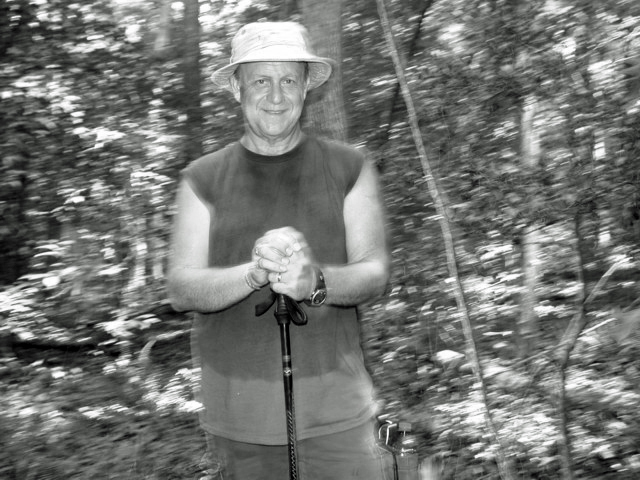
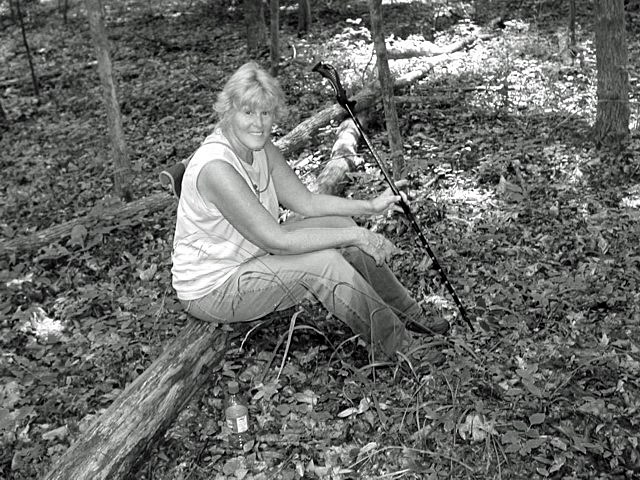
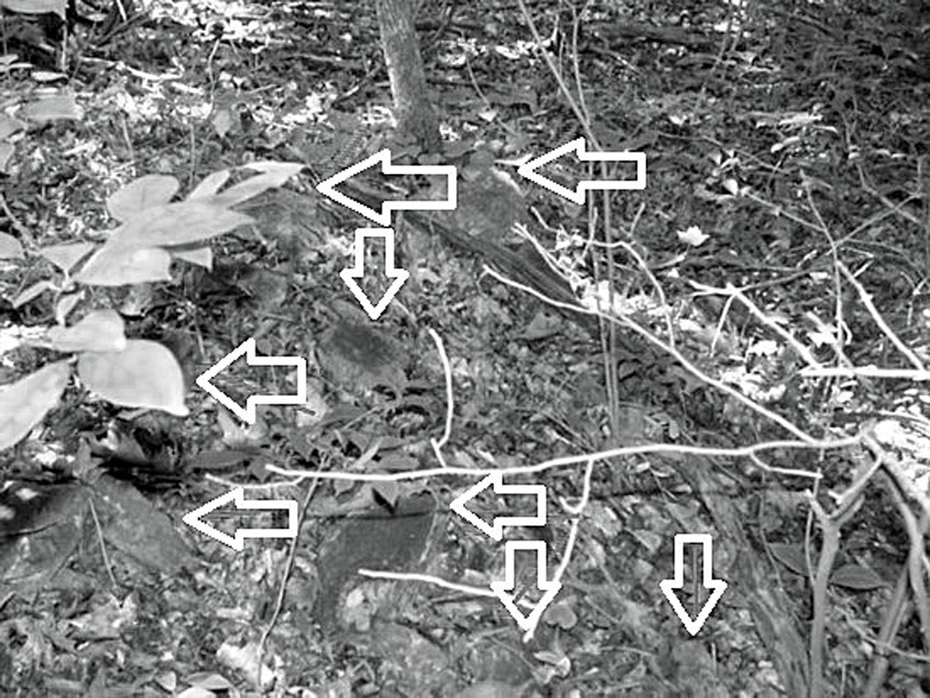
Pile of rocks from the fallen chimney of first Robert Berry family cabin.
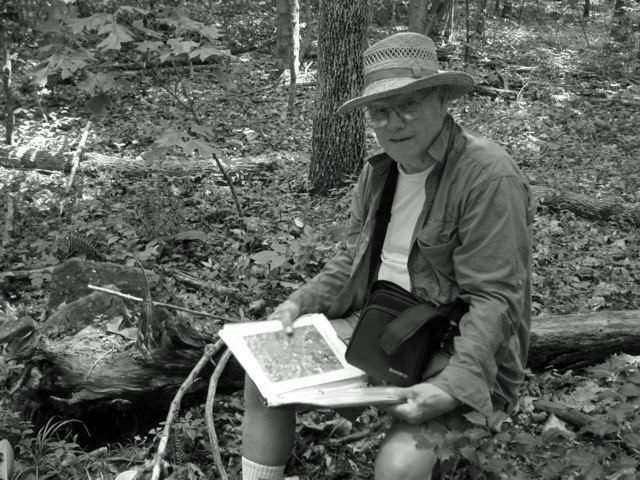
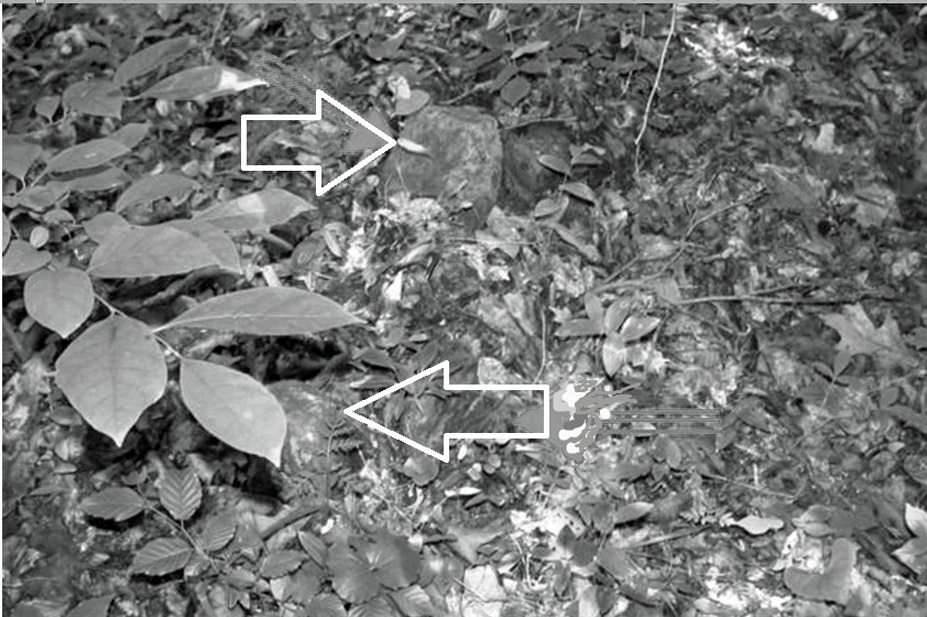
Robert and Elizabeth Cate Berry’s first cabin and home until he built their new Plantation House. The family most likely lived here from 1757 until 1766.
Foundation rocks
GPS reading for this site: 36'13'39" N 79’ 01'09’W
This would have been a rather large cabin that would have provided approximately 750 sq feet of living space. This is probably where Mary, Robert Jr., John, Joshua, and Isaac Berry were born. Lick Creek was about 200 feet due west of this cabin location and would have been a source of very clean water. There seemed to be the remains of a very old trail on the south side of the cabin location. This trail was running east and west and most likely led from Robert’s cabin to his west property line where a major road from Hillsborough to Roxboro in Person County is currently located. Highway 157 has been moved about 20 feet east of the original roadbed. Very likely Robert Berry OC and the road building crews built the original road in the 1770’s. This cabin was located very close to the center of the original Granville Land Grant property.
From 1754 until 1763, the French and Indian war was being fought near the Canadian border but had very little, if any, effect on the area where Robert Berry OC and his family were living. The local Indians were very friendly and possibly the biggest danger the family faced was from an occasional wild animal attack. It is almost certain that the children were always close by when Robert and Elizabeth were working in their field with the few slaves that they owned at the time. It is almost certain that Robert had a loaded musket close by at all times. The older children would be helping by doing whatever chore they could while the younger children played close by. These times required a lot of hard labor but the gratification they experienced is enviable. There are very few people in today’s society who have an opportunity to enjoy life so close to nature. This is especially true of parents who have to work outside the home to earn a living. The children were allowed to be children and the adults acted as adults. There was always time to stop and look at a deer running near the woods or a flock of geese flying overhead. The children could chase a rabbit or listen to a Mockingbird singing in the trees. All of these activities equipped the children to assume their responsibilities when they became adults.
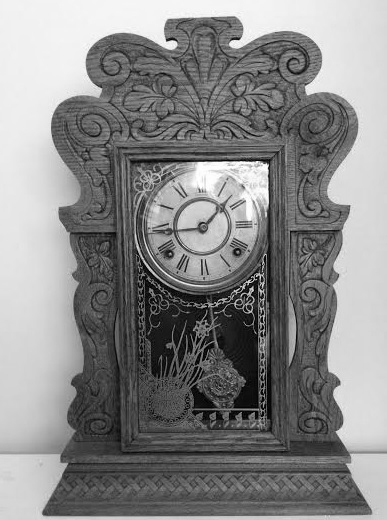
The formal education, reading, writing, and arithmetic were taught by the parents or later by a teacher who lived with the family. James Berry, Robert’s OC grandson, had a teacher living with their family in the 1850 Smith County, Tennessee, census. My grandparents also had a teacher who lived with them and taught at the Meredith School in Orange County, North Carolina. My son has an eight day clock that my grandmother Berry bought from this teacher when he moved away from my grandparent’s home. My mother told me that grandmother Berry paid two dollars for the clock shown on the left.
It is a “Sessions Gingerbread Mantel Clock with 8 Day Movement - Circa 1910”
Robert Berry’s Revolutionary War Pay Vouchers#
Here is a copy of Robert Berry’s pay voucher that identified him as a private in the Continental Line of North Carolina. He was paid twenty three Pounds, nine Schillings and 6 pence with interest to be paid in May of 1792, one fourth of Robert’s pay owed by the State.
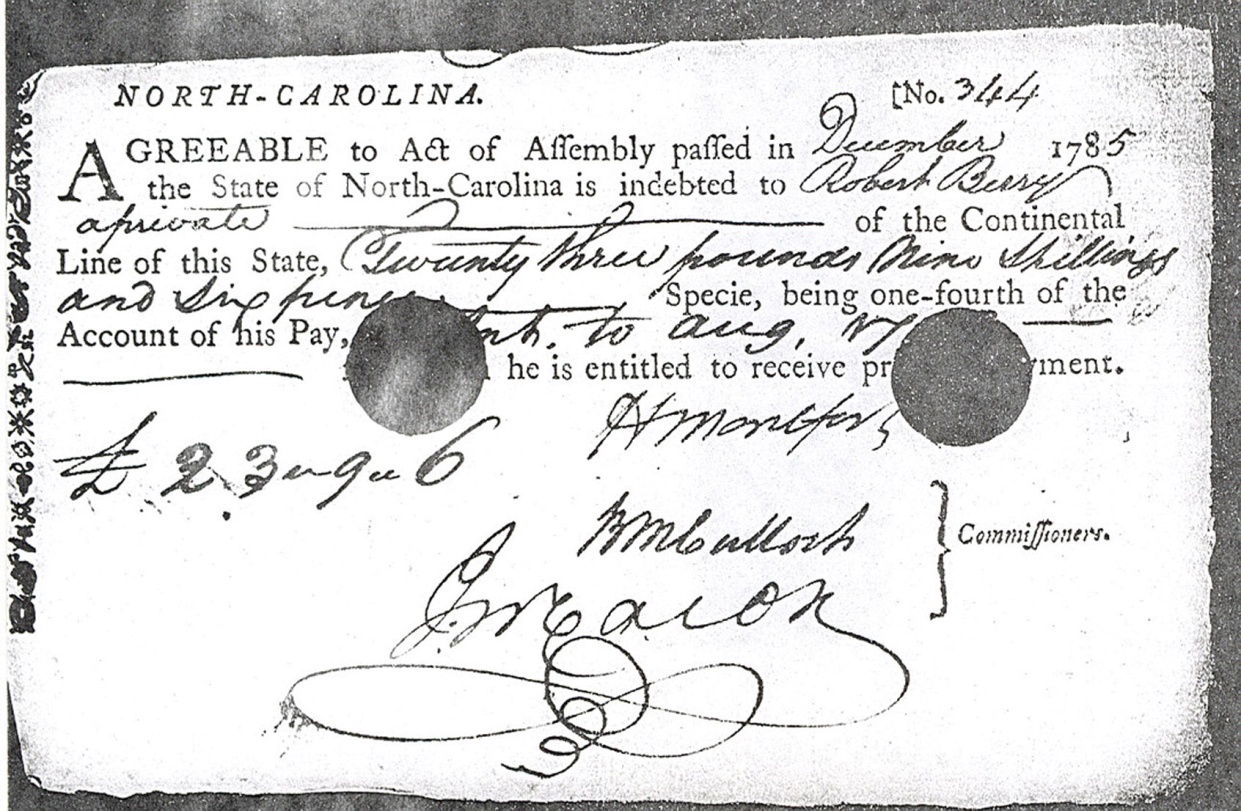
Pay to Robert Berry a private in the Continental Line of North Carolina
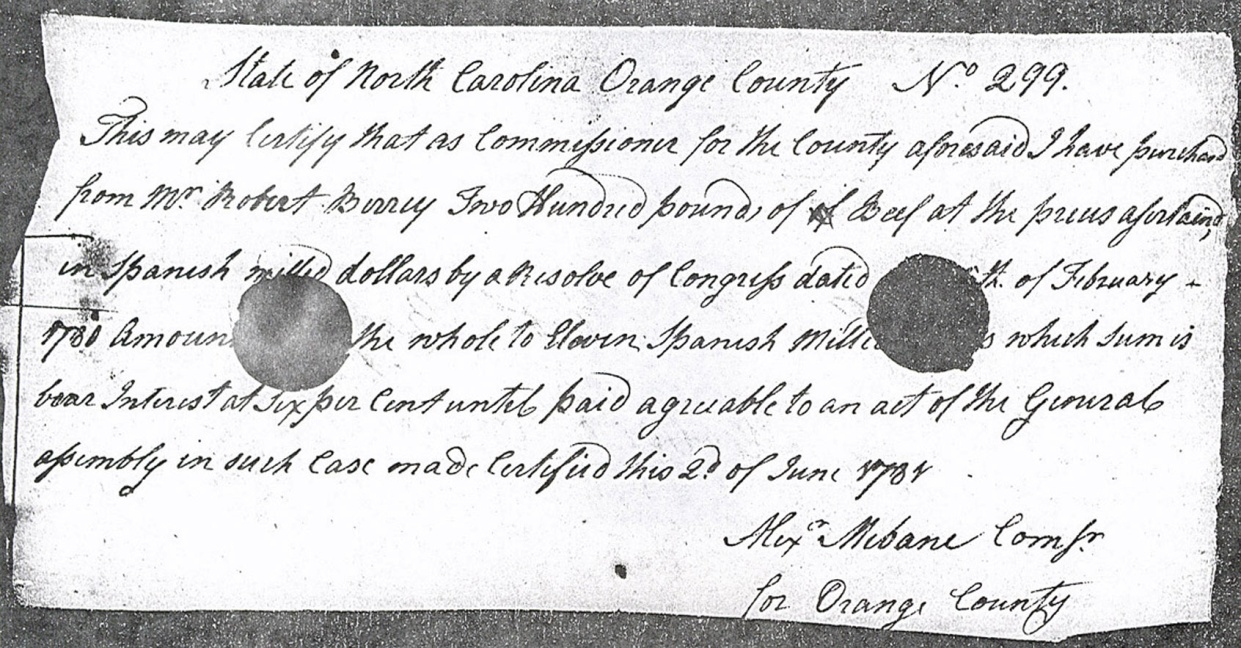
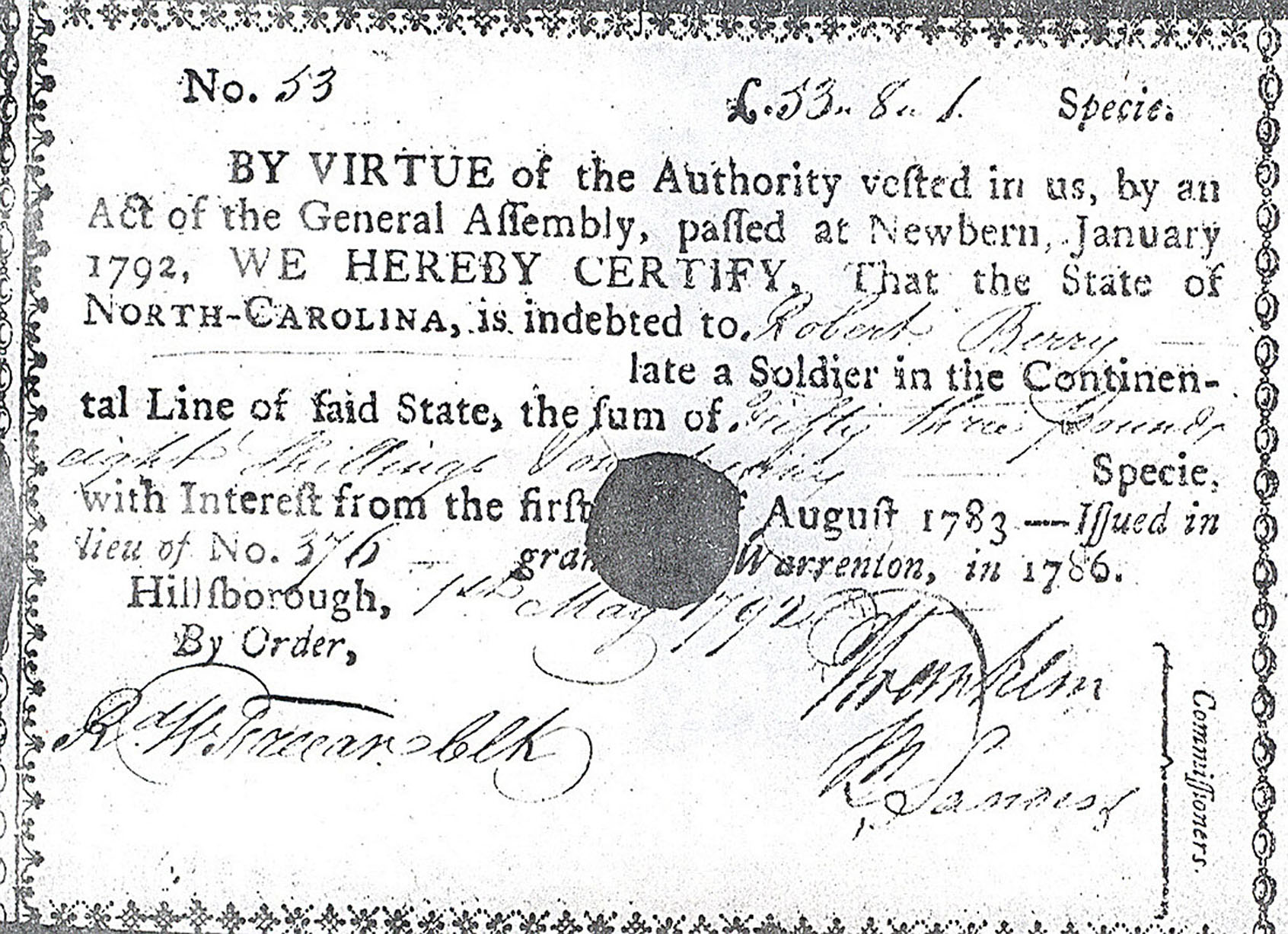
Robert Berry appeared before the Hillsborough Auditors Office in May, 1792, and was paid 53 pounds, 8 shillings and 1 pence specie with interest from first day of August, 1783. In lieu of Voucher #376.
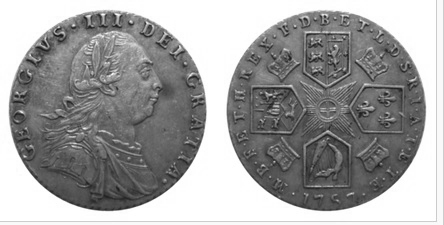
On the right is a 1797 six pence English coin minted under George III.
Robert Berry OC probably only fought in one major battle and did not become involved with the war to any great extent until General Charles Cornwallis started advancing toward North Carolina. The battle at Guilford Courthouse fought on March 15, 1781, was declared a victory for General Cornwallis but one of the members of Parliament in England stated that a few more wins like the one at Guilford Courthouse and the war would soon and be over. Cornwallis lost a large number of men in that battle. It was soon after this battle that General Cornwallis and his army left North Carolina and headed toward Yorktown. Cornwallis surrendered at Yorktown October 19, 1781. The comment by the Parliament member in England turned out to be an accurate assessment of the situation Cornwallis faced in America.
Because Robert Berry OC was a veteran of the Revolutionary War, all of his descendants are eligible to join the DAR or the SAR depending on their gender. Robert Berry enlisted in the 6th Regiment under Seargent Dohertys Company in 1777 for the duration of the war and was omited in July, 1799. He recieved 93 pounds, 18 schillings, 1p. total pay. Source: (Roster of the North Carolina troops in the Continental Army; Thomas, Lynde, & Benjamin, 1791)
After 1776, the state of North Carolina started confiscating land that had been owned by the Tories, and the state made this land available to Patriots as an incentive to enlist in the North Carolina Continental Line. The North Carolina State land office opened January 29, 1778, and Robert Berry made entry for his state grant on December 4th, 1778. Robert Berry was granted 293 acres of land by the State of North Carolina on March 13, 1780. There were many grants issued to Robert Berry’s friends and close neighbors during the 26 months that the North Carolina Land Office was open.
Robert Berry Court Records in Orange County#
Minutes and Abstracts#
1751: Robert Berry arrives in Granville County
1752: Robert Berry makes entry for land grant in Granville County
1752: land office issues warrant for Robert Berry’s grant in Granville County
1753: Survey for grant was made on Dec 3 1753 SCC Henry Gold, Thomas Cate, William Churton, surveyor 3 Dec 1753 “Plat reads surveyed for Robert Berry Jr.” Patent Book 14:334
1756: December 1756 Orange County, N.C. Court Minutes: Robert Berry agt. Richard Gibbs:
Thomas Williams security delivered up the Principal, Order’d the Sherriff take him into
custody & commit.
1757: March 1757 Orange County N.C. Court Minutes: John Russell proved his attendance as
in evidence in Suit Berry vs. Gibbs. Phoebe Ran proved her attendance as evidence in
suit Berry against Gibbs. Lawrence Winfield proved her attendance as evidence in Suit
Berry vs. Gibbs John CATE & Margery his wife, proved her attendance as evidence (sic)
in the Suit Berry against Gibbs for Plaintiff.
1757: Robert Berry agt. Richard Gibbs: In Case. And the defendant by his Attorney comes and defends the force and injury when and where &c. and Saith that he did not assume in manner and form as the Plaintiff against him declared and of this he puts himself upon the Country and the Plaintiff Likewise Therefore let the Jury come agreeable to act of Assembly to Recognize &c. The same came the Parties by their Attorneys whereupon came also a Jury to wit: &c. who being elected tryed and sworn the truth to speak upon the issue Joined on their Oath do say that the Defendant did assume in manor and form as the Plaintiff in his Declaration hath set forth and do assess Damages to four Shillings and nine Pence, Therefore it is the opinion aforesaid in form aforesaid Assessed and his cost by him in that behalf expended and the defendant in mercy &c. Judgment L-: 4:9, Clerk 3:9:11
1757: Patent book 14 page 334 Robert Berry 12 May 1757 260 acres in Orange County in the parish of St. Matthew on both sides of Lick Creek OR: /s/ Witness: William Churton, William Reed, surveyed 3 December 1753 SCC Henry Gold, Thomas Cate, W Churton surveyor “plat reads “surveyed for Robert Berry, Junior”
1758: Orange County, N.C., Court Minutes: A deed of sale from the Earl of Granville to Robert Berry for 260 Acres of land was proved in open court by the oath of William Churton and was ordered to be registered.
1758: May 6th Survey for Nathaniel Walton, Granted 15 July 1760 402 acres in Orange County in the parish of St. Matthew both sides of ye middle fork of Little River in both sides of a branch OR:/S/Nathaniel Walker witness W Churton, Henry record examined by Thomas Jones and David Churton survey 26 may 1758 SCC: Archilias Wilson, Robert Berry, W Churton surveyor.
1759: The following persons were sworn as grand jurors: Aaron Vanhook, Lawrence Rambo, Gabriel Davey, Thomas Clark, James McGowan, Andrew McBroom, Thomas Thompson, William Basket, Robert Berry, Thomas Dobbin, Henry Lemon, Robert Donnellson, Robert Patterson, John Satterfield, James Dinkins, Thomas Whitehead, Hugh wood, Hugh Smith.
Transcription of bond agreement
Orange County, North Carolina
A Reorganizance
1761: On this 20th day of November 1761 personally came me James Baldridge justice of the peace for the said County, Robert Berry senior, of the aforesaid. And James Allison and James McCuloch both of the county planters and acknowledge that they do owe to the state that is to say the said Robert Berry 20 pounds current money of the said state and the said James Allison and James McCuloch each 72 pounds of like money to be levied of their goods and chattels land in teniments to the use of the state if default is made in performance of the conditions here underwritten.
The conditions of the reorganizance is that if the bound Robert Berry shall permanently appear before the justice of the peace at the said County court to be held by the county Orange on fourth Monday of September 1790 to enquire unto such matters are shall then and there objected against him by the state attorney for not keeping the road in the condition possible by vote of the assembly and to keep the same in good order and repair from Little River by David Allison’s to the county line that he do not depart without leave of the court then and there. reorganizance to be void or else remain in force and knowledge before me
James Aldridge J.P.
SOURCE: “ORANGE COUNTY ROAD RECORDS, Vol.1, 1786 1820” by Stuart E. Donaway
1762: Patent Book 12, page 1 James Murdock 26 November 1762 192 acres in Orange County on both sides of the North fork of Little River OR: /s/ (grant is unsigned) examined by: Thomas Blunt surveyed November 26, 1762 (sic) SCC: Michael Robinson Robert Berry (survey name not given)
1762: 26 Nov 1762 Patent Book 12:1 North Carolina Grant, John Willson March 13 1780 surveyed 12th June 1779 by Thos. Mulholland D.S. Robt. Berry & Wm. Willson SCC Patent Book 32:411
1763: John Carteret, the first Earl of Granville, died in 1763. His land office was promptly closed, never to reopen. He died in his house in Arlington Street, London, on 22 January, 1763. There was a second earl of Granville, but there was no land granted between 1763 and 1778. Many of the battles of the Revolutionary war were being fought during these years. The North Carolina state land office opened January 29, 1778, and closed March 30, 1780.
1769: Robert served on jury in the December term of 1769 [351] 176 bk. 1 pg 99.
1770: “The Collet Map of 1770 stands as the first reasonably accurate record of the permanent geographical features of Burke County. The map, prepared by Capt. John Abraham Collet, a native of Switzerland who served in the British army at Fort Johnston on the Cape Fear River, was based primarily on information gathered by William Churton of Edenton, Churton, who had served as surveyor of the Granville District, died in 1767, the year Collet arrived in America. Gov. William Tryon turned Churton’s map material over to Collet, who completed the work.” William Churton was one of the Granville Land Officers for Lord John Carteret.
1777: The Provisional Assembly of the State of North Carolina declared the State sovereign over all the lands between Virginia and South Carolina, although it recognized claims to land granted by the crown and proprietors prior to July 4, 1776. The Assembly called for the confiscation of all lands and property of persons who supported the British. Granville’s lands were confiscated by the State of North Carolina in 1777; and McCulloch’s in 1779. Following the war, the Carteret heirs were compensated in part for the loss of their lands.
1777: November term 1777 Orange N.C. Court Minutes: Issd. Ordered That The Following Persons work on the Road Under Thomas Rountree To Wit: James Allison, William Mckee, James Murdock, Moses Gwinn, John Murdock Sen, John Wilson, Archd Wilson, William Wilson, William Robinson, William Armstrong, Robert Berry, Michl, Robinson, & Danl. Mcmahan. This is the first notice that I have found where the local residents were decreed by court to build roads in the county. I think each of these men was granted land on March 13, 1780. Very likely the state authorities recognized the need for roads as the American Revolution was being waged in the colonies. They may also have stipulated this roadwork as a prerequisite to entering a request for the grant. These state authorities were probably anticipating the coming actions in North Carolina based on the increased activity of the English armies in Georgia and South Carolina.
1778: The grand jury to wit: Samuel Allen John Dickey, Robert Anderson, Josie for Ray, William Anderson, William comb, Gilbert Strayhorn, James Murdock, Robert Berry, John Kelly, William Robinson, Hugh Finley, William Armstrong, Benjamin Thompson, Henry Waggoner and Andrew McBroom been impaneled and sworn received their charge and withdrew Wortham Glenn appointed Constable to grand jury. [1107] Bk. 3.
1779: Robert Berry is appointed overseer of the road in the room of Thomas Bowles.
1780: page 267, 13th March 1780, North Carolina to John Wilson 50 schillings per hundred acres 250 acres on waters of flat River, joins Archilias Wilson and Robert Berry begin at a stake, North 71 chains to a post oh East 15 chains to a stake, North 10 chains. to a stake, East 10 chains to a post oak, South 45 chains to a Hickory East 45 chains to a stake South 36 chains to a black Jack, West 70 chains to first station; Signed R. Caswell; witness: William Shepherd. No probate record
1781: November term 1781: the last will and testament of George Waggoner deceased. Was duly proved in open court by the oath of George Clower a subscribing witness thereto and ordered to be recorded at the same time Mary Waggoner and Robert Berry qualified as executor and executrix to the same. Ordered that letters testamentary issue to them accordingly.
1782: February term 1782 an inventory of the estate of George Waggoner deceased was returned on oath by Robert Berry and Mary Kemp (sic) executor and executrix etc. and ordered to be recorded.
1782: May term 1782 Robert Berry is excused from attending as a juror at this court he having shown sufficient reasons etc. Most likely Robert Berry was excused from jury duty because it was planting season and the war had just ended in 1781. Cattle and vegetables would have been in great demand this soon after the war. The war had placed a terrific drain on food resources. I suspect other planters were also excused from this session of court.
1784: May term 1784 Orange N.C. Court Minutes: Issd. Robert BERRY is appointed Overseer of the road in the room of James Murdock [1429 190 folio 37 bk. 3 pg90.
1786: Robert Berry Jr. was the bondsman for Aldridge, Peter & Judith Waggoner 4 Feb., 1786. Robert Berry Junior’s son, George Berry, many years later married Susanna Aldridge, Peter Aldridge and Judith Waggoner’s daughter, in 1814. Robert Berry Jr. and his family were living in Person County when the 1810 Census was taken.
1786: August term 1786 Orange N.C. Court Minutes: Issd. Michael Robinson is appointed Overseer of the road in the room of Robert Berry from Caswell line to the South fork of Little River.
1789: August term 1789 Orange N.C. Court Minutes: Robert Berry is appointed overseer of road in the Room of T. (Thomas) Bowles.
1791: William Jamison versus Robert Berry: Certiorari. Same jury as number [blank] find verdict for plaintiff for one pound: four shillings: nine pence & cost
1791 May term 1791 the execution of a deed from William, James, and Thomas Rutherford to Robert Berry was duly acknowledge in open court by Joseph Taylor Esq. attorney etc. and ordered to be registered
1791: November term 1791 issued administration of the estate of James Waggoner is granted to Catherine Waggoner at the same time she entered into a bond with Robert Berry Junior. Secretary in the sum of 50 pounds.
1791: John Armstrong is appointed overseer of the road from Caswell line to the South fork of Little River in the room of Robert Berry
1791 May term 1791 Orange N.C. Court Minutes: Wm. Jamison vs. Robert Berry, Certiorari. Same Jury as to No. [blank] Sworn find Verdict for Plaintiff for L 1:4:9 & cost. Robert lost this case and had to pay Wm Jamison One Pound, 4 Shillings, 9 Pence. Court Minutes [2092]-54. Bk. 4 p 106 this may have something to do with George Waggoner’s estate.
1791: November Term 1791 Orange N.C. Court Minutes: Book 4 pg 114 Issd. Administration of the estate of James Waggoner is granted to Catherine Waggoner at the same time she entered into Bond with Robt. Berry Jun. Secy. in the sum of L 50. 1791: November Term 1791 Orange N.C. Court Minutes: Book 4, pg. 115
1791: Tho. Burks Exrs. Vs Geo. Doherty* & Wm. Mebane: Debt. Jury Sworn To Wit: 1. Martin Parmer, 2. Brice Collins, 3. Tho. Brewer, 4. James Murdock, 5. Robt. Berry, 6. Jno. G. Rencher, 7. Jno. Armstrong, 8. Henry Terrel, 9. Tho. Connelly, 10. Jno. McCollum, 11. David. McCauley, 12. Benj. Peeler, Find The Deed To Be The Act & Deed Of The Delfts, And That The Same Is Not Pd. & Assess The Plaintiffs Damages To L 12:4:10 & Cost. Stay Ex. Til 15 Days Before Next Court.
*NOTE: Robert Berry served in the North Carolina Continental Line under Sargent Doherity see page 89.
1791: November Term 1791 Orange N.C. Court Minutes: Book 4 pg 116 The Execution of a Deed from Wm., James, and Thomas Rutherford to Robert Berry Was Duly Acknowledge In Open Court By Joseph Taylor Esq. Atto.& c. and Ordered to be registered,
1791: The listing on November 1791 was the only mention about Robert Berry’s OC son Robert Berry Junior
Robert Berry OC served on several juries. He served on the jury in March 1759, November 1777, and February 1778, Grand Jury August 1786.
Robert was excused from jury duty on May 1782. Robert Berry was away from home serving in the North Carolina Continental line at this time.
He was a juror on Governor Thomas Burke’s estate trial November 1791.
Robert had deeds entered in the court records on May 12, 1757, September 1758, and November 1791
Robert was a chain carrier on May 6th, 1758, for George Miller; on May 26th 1758 for Nathaniel Walton; on November 26, 1762 for James Murdock; on August 7th 1763 for Patrick Rutherford; June 12th, 1778, for John Wilson.
Robert was involved in law suits in December 1756, September 1758 and May 1791.
Robert Berry was appointed overseer of road in May 1784 in the room of James Murdock, and in August 1789 in the room of Thomas Bowles. He was appointed to a road building crew under Thomas Rountree in November 1777.
On August 17, 1786, Michael Robinson was appointed overseer of the road in the room of Robert Berry from Caswell Line to River. On November 1789 John Armstrong was appointed overseer of the road from the Caswell Line to the south fork of Little River in the room of Robert Berry.
Robert Berry’s Land Transactions#
1757 Granville Land Grant 260 acres on May 12th
1780 North Carolina Land Grant 293 acres on March 13th
1785 Purchased 200 acres from John McCuloch for
25 pounds 4 Schillings proclamation money
1787 Purchased Rutherford Property 247.5 acres that adjoined his Southern Boundary: Deed book 4 Page 516
1791 Rutherford heirs deeded property to Robert Berry.
Total acreage acquired by Robert Berry OC from 1787 until 1800 was 1000.5 acres. Robert began to sell off his property in 1800. Most of his children were married and moving away from home. He had three children who were deceased. He was getting older and probably used some of the money to buy some younger slaves. This would allow the family to keep the plantation running after he died. At the time Robert Berry OC died, he still owned 600.5 acres of land and 13 slaves.
Selling Off The Property#
On October 14, 1800, Robert Berry senior sold the east part of the 200 acres he acquired in 1780 by his North Carolina Grant to William Armstrong, deed book 13 page 330. Robert Berry retains 93 acres that adjoined his own East boundary of the original Granville Land grant. This reduces Robert’s land holdings to 800 acres.
On the 27th day of February, 1807, Robert Berry senior sold William Stagg the track of land containing 200 acres that Robert bought in 1785 from John McCulloch, Orange County Deed Book 39 page 396. William Stagg married Uley Waggoner on January 22, 1805.
On 24 February, 1811, Robert Berry senior sold his son Joshua Berry the property that lay west of Lick Creek containing approximately 129 acres which amounted to about half of the original Granville land grant property. Orange County Deed Book 14 page 57.
Apparently Robert Berry never sold the Patrick Rutherford property during his lifetime. Hannah Cate Berry and her sister Sarah Cate Berry were living there while Thomas and William Berry were searching for land to homestead in Tennessee
Hannah listed as head of household in the 1810 census. The Patrick Rutherford plantation house was south of the Fiddleton Plantation and the two properties had a common boundary.
In the 1810 census, Robert Berry and Hannah Cate Berry were listed side by side.
Patrick Rutherford was listed in the 1755 Orange County Tax list but might not have been living on the land he was granted on August 14th, 1780.
Robert Berry’s 1812 Will, Transcribed#
Written April 16, 1812
In the name of God Amen. I Robert Berry being of perfect mind and memory calling to mind. That all men are born once to die, do make and appoint this my last will and testament: First will my soul to the Almighty God who gave it me and my body to the grave to be buried in a decent Christian burial at the discretion of my executers, Secondly I will and bequeath to my loving wife Elizabeth four of my negroes the names of which is old Jack and Rose, Frompey and Sall, also my possessions of land her lifetime, I will and bequeath to my Daughter Elizabeth Berry one of my Negroes named Doll, also two cows and calves her lifetime and then for them and their increase to be property of her daughter Mary. I will and bequeath to my son Robert Berry one negroe boy named Solomon, I will and bequeath to my son Joshua Berry one boy named Aaron, I will and bequeath to my son Thomas Berry Dec’d, children one Negro girl named Mariah; I will and bequeath to my son Isaac Berry one negroe woman named Lydia also one horse to the value of thirty dollars and two cows and calves, This my son Isaac Berry’s legacy to be left in the care of my son Henry Berry so as for the aforesaid Isaac to have the benefit of it but not so he can sell or dispose of it without Henrys Approbation also this my son Isaac Berry’s legacy at his death be divided among my heirs equally provided he has no heirs born after this will is wrote also This my son Isaac Berry legacy to be given to him for to be at his disposal if he comes to his proper reason, if he does not come to hid right reason to be left as above mentioned, I will and bequeath to my son David Berry one negroe girl named Tamer; I will and bequeath to m son William Berry one pound. I will and bequeath to my son Henry Berry two Negroes named young Jack and Nicy and two cows and calves also my possessions of land at his mother’s death provided he gives to my son Isaac Berry one hundred dollars fifty to be paid one year after his mother’s death and the other fifty in two years after his mother’s death. I will and bequeath as much of my property shall be sold as will discharge all lawful debts, and all such to be discharged. I will and bequeath to my daughter Mary Kemp Dec’d heirs one pound. I will and bequeath to my son John Berry Dec’d heirs one negro girl named Luinda. The remainder of my property I will to my wife Elizabeth to be at her own disposal. I disannul and disavow all other will or wills; I do constitute and appoint my wife and my son Henry Berry my executors to execute this said will. Signed, sealed and perfected the year one Thousand eight hundred and twelve April the 16th day in the presents
Test J Rountree X (Jnr.) Robert Berry (SEAL)
Test Wm Robinson
When Robert wrote this will, he named his wife, all 10 of his children, and one granddaughter, Mary, by name. All 13 of his slaves were also identified by name in his will.
Children: Mary Berry Kemp/Camp, Robert Berry Jr., John Berry, Joshua Berry, Isaac Berry, Elizabeth Berry, Thomas Berry, David Berry, William Berry, and Henry Berry.
Slaves: Old Jack and Rose, Frompey, and Sall, Doll, Solomon, Aaron, Mariah, Lydia, Tamer, Young Jack, Nicy, and Luinda. There were 8 female and 5 male slaves.
A Study of Robert Berry’s Personal Traits#
Robert Berry OC was probably considered an outstanding citizen of the Little River community. In addition to creating a very prosperous plantation, Robert OC was also very active in the community affairs. He contributed a lot to the road building that was absolutely necessary for the plantation owners to move their crops to the available markets. Robert OC served on jury duty on several occasions. He was overseer of the road building crews from time to time and served on the road building crew with his neighbors, who were also responsible for overseeing road building at various times.
Robert continued to prosper from the time he entered Granville County in 1751 until he died in 1814. He started with a 260 acre Granville land grant in 1757 and owned 1000 acres of land by the year 1800. He raised 10 children to be adults and he owned 13 slaves at the time he wrote his will on April 16, 1812.
Much about the character of our ancestor Robert Berry OC was revealed in his will. He went into very lengthy detail giving instructions on how to care for the less capable members of his family after his death. He made sure that his daughter Elizabeth inherited property, even though she had given birth to a bastard child. Mary Berry, his granddaughter, was the daughter of William Riley and Elizabeth Berry. There was a bastardy bond issued charging William Riley as the father of her unborn child in 1792. Elizabeth Berry may have been raped but we do not know the circumstances surrounding her pregnancy and childbirth. Robert Berry OC instructed Elizabeth to pass her inheritance to his granddaughter Mary upon Elizabeth’s death. Elizabeth Berry and her daughter, Mary, also lived with Elizabeth’s parents until Mary got married in 1809. At that time Mary Berry, her husband Thomas Berry, and her mother Elizabeth removed to Person County, North Carolina. They were there when the 1810 Person County Census was taken. Robert Berry Jr. was living next door to them. Very likely they were living on some of their grandfather John Cate’s property.
Robert Sr. also went to very great lengths to see that his son Isaac, (who was apparently mentally retarded), was well provided for after his death. Isaac was placed under the care of Robert Berry’s OC youngest son, Henry Berry. Robert very clearly explained in his will what conditions were to be observed in the management of Isaac’s inheritance. He also made it possible for Henry Berry to turn over Isaac’s inheritance should he become of normal reason.
Having lived under English rule for about 25 years and deciding to become a patriot would have required a lot of courage. By making this decision he would be considered a traitor to his country. I’m sure this decision was not made lightly by our ancestor because of his stature in the community, but his action may have also influenced a lot of other people. Many of his neighbors of lesser influence had been abused by the local politicians for many years. The skirmish of the regulators with Gov. Tryon and his troops and the treatment of the regulators that were hanged on the Hillsborough courthouse lawn after that event may have convinced Robert Berry OC that revolting against English rule was the only choice. As general Charles Cornwallis was advancing into North Carolina and headed toward Orange County, it is likely that Robert Berry OC felt a lot more comfortable with his decision to enlist in the North Carolina Continental Line as a private.
Some historians believe that the battle of Alamance was the very first battle of the Revolutionary War. Governor Tryon had been approached several times about the unfair tax collection practices in Orange and other surrounding Counties. The Governor agreed to have a fairer tax collection implemented but nothing ever changed. The longer the situation continued, the angrier the local citizens became. It is almost certain that Robert Berry OC was involved in the Battle of Guilford Courthouse on March 15, 1781. Robert Berry’s son-in-law, George Wagoner, may have suffered mortal wounds in this battle that led to his death a short time later. George Waggoner’s will was written only two weeks after the battle was fought on April 2nd, 1781. George Waggoner’s will was probated in August, 1781. Robert Berry and his daughter, Mary Berry Waggoner, were assigned executor and executrix of that will.
Mary Berry Waggoner was married to James Kemp/Camp before February, 1782, when she signed George Waggoner’s property settlement. This is known because she signed the property statement as Mary Kemp.
Conditions under which Robert Berry OC and his neighbors lived from 1751 until 1776 required that they be very self-reliant and independent. He can truly be classified as an original pioneer. Robert Berry probably always enjoyed these new found freedoms and the feeling of independence it provided and rewarded him. He essentially declared his personal independence as a free man the day he left Princess Anne County to come to North Carolina long before 1776.
Everyone has heard the statement that behind every great man is a great woman. I would be remiss to give Robert Berry OC all of the credit for his apparent love of his family. Elizabeth Cate Berry was obviously a very healthy and strong woman, and it is likely she had very strong morals and empathy for other people also. Together, they accomplished a lot in their lifetime and to give either one of them all of the credit would be wrong.
Robert and Elizabeth Cate Berry worked very hard during their entire lives. I expect they would demand the same work ethics from their children and their slaves. I don’t think anyone can have the success they had in life without these same strong work ethics and good qualities. Smart management always begins at the top because they set the standards and lead by example. In a business one can weed out the non-performers, with children it’s very different. Judging from the information that I have been able to obtain about Robert Berry OC, he seems to have been a fair, just, honest, ambitious, and compassionate human being.
The fact that Robert Berry and his wife Elizabeth Cate Berry lived into their mid 80’s and raised 10 children to adulthood is probably the best argument available to us today supporting a Green environment and living Natural.
All of their food was raised without chemical fertilizers or genetically modified foods. All of their sweeteners probably came from fruit and honey. They never had any soft drinks or sugar snacks. The meat from the animals that they ate was never fed any growth hormones nor did the animals ever eat any grain or hay that was gown with chemical fertilizers or sprayed with chemicals. The milk they drank was whole milk and never pasteurized. All of their medications were concocted from natural ingredients and I suspect the home remedies had been used and proven by many generations of ancestors and native Indians long before they themselves were born. They were never exposed to any chemical medications. The water they drank came from wells that were not polluted with chemically treated runoff human waste, farm chemicals or fertilizers. The air was pure and was not polluted by any fossil fuel emissions. And lastly, the work they had to do to survive was the best form of exercise known to man to keep the human body healthy.
Fiddleton Cemetery#
The URL for the FIDDLETON cemetery:
http://cemeterycensus.com/nc/org/cem233.htm
Many of Robert Berry’s neighbors came to America from Scotland. There have been researchers who have tried to say that Robert Berry was from Scotland also.
There was a Presbyterian Church formed very early in the Little River community just North of Hillsborough. The Little River Presbyterian Church was organized in 1761. The Presbyterian movement in America is definitely an institution of the early Scot-Irish settlers. Today, Little River Presbyterian Church has a very large cemetery, but Robert Berry was buried in his own private cemetery in 1814. There are only 4 Berry Graves in the Little River Cemetery and the earliest Berry grave was of James Berry, Company D, 56th Infantry, C.S.A. Little River Presbyterian Church is only seven miles south of Robert Berry’s Granville Land Grant property. Since the Little River Presbyterian Church was the only church located close to Fiddleton, Robert Berry OC and his family would have been members if he were Scot Irish. Robert Berry OC had been in North Carolina for about 20 years before Little River Presbyterian Church was formed. Because of these facts, Robert Berry OC was probably not affiliated with any Church during his lifetime. He and his family were buried in a private cemetery that we call Fiddleton Cemetery. His later descendants who remained in North Carolina were mostly Southern Baptist and Methodist, and many of them were very active in their faiths.
Many of Robert Berry’s Scot-Irish neighbors are buried in the Little River Presbyterian Church Cemetery. There is no record of Robert Berry or any of his children ever belonging to this church. These two facts are added reasons for me to believe that Robert’s ancestors came from England. I feel certain, if Robert Berry had come from Scotland, he would have been a member of the Little River Presbyterian Church and he would have been buried there. I have Scott-Irish ancestors on the Wilson side of my family who are buried there.
URL for Little River Presbyterian Church: http://cemeterycensus.com/nc/orng/cem039.htm
Robert Berry OC was very likely the first person to be buried at Fiddleton Cemetery. Elizabeth Cate Berry was very likely the second. If Robert and Elizabeth had any young children who died they could have been buried there before any of our adult ancestors. Although we cannot identify the graves, Robert and Elizabeth are probably buried beside each other. Isaac Berry is probably the third adult member of the family to be buried there. If Joshua Berry is buried there, he would probably have been the fourth. We counted 23 graves and six of them can be identified. The rest of the stones have no markings remaining on them. Originally, information may have been scratched onto the field stones but time has eroded all of this information. Henry Berry died in 1855, Hannah Berry died in 1858. Thomas Person Berry’s son, William H Berry, died in 1858. Joshua Berry’s son, Lewis Berry, also died in 1858. Lewis Berry may not be buried there but Henry, Hannah, and William H Berry are almost certain to have been buried there. Members of the King family are definitely buried there and that probably includes Fanny Ashley. There is only one fieldstone that is hand-shaped into a headstone. (See Fig: 33, Page 99 and the headstone comparison on page 134)
Fiddleton Cemetery Orange County, North Carolina#
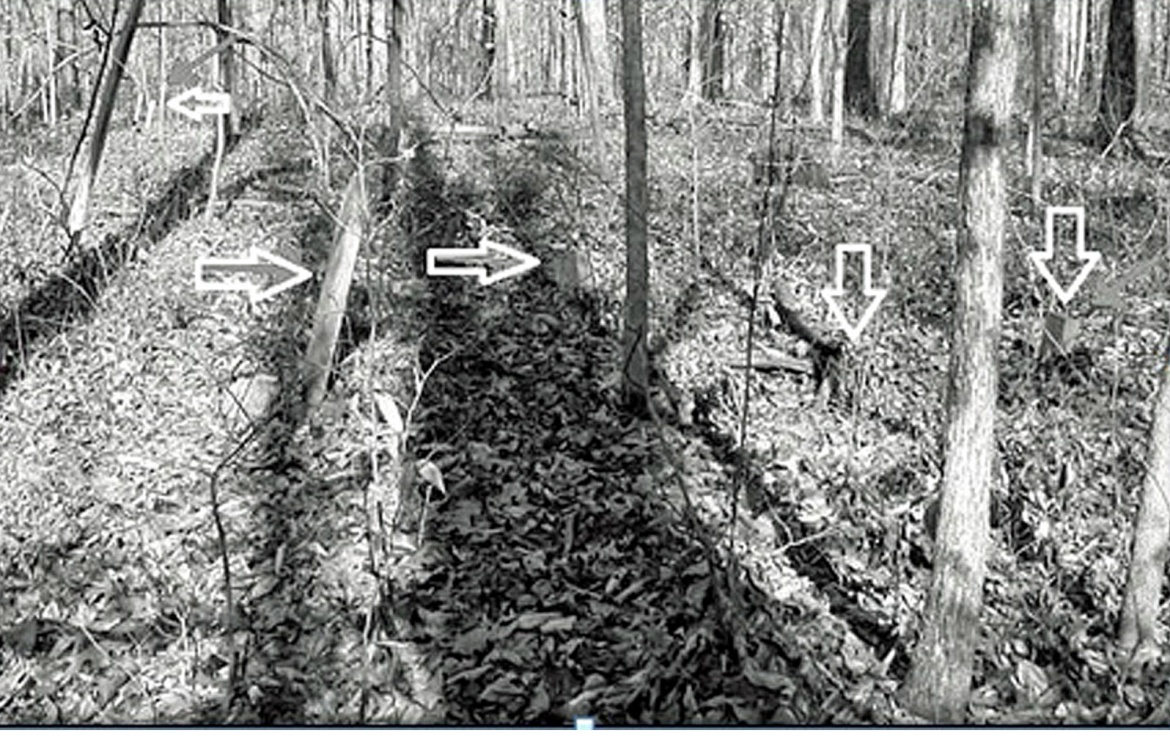
In Fig. 20, Pg. 73, Robert Berry’s family cemetery is marked with a balloon and a star in the center. These cemetery pictures were taken in January, 2007. There are 23 graves located in this Robert Berry Family Cemetery. Six of these graves are marked with gravestones identifying who is buried there. The rest are fieldstones without any identifying markings. Robert Berry was probably the first of our relatives to be buried in this cemetery. Elizabeth Cate Berry may be the second grave located here.
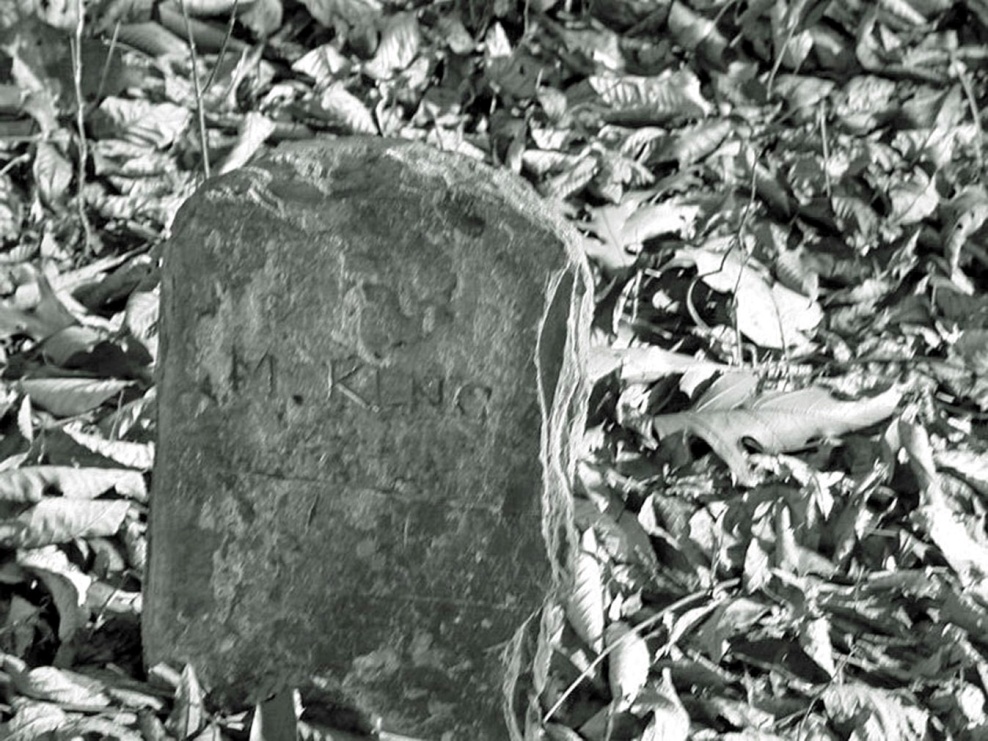
Mary Ashley was really Mary Berry, daughter of Henry Berry and Fanny Ashley. This information was a secret until Susan A King Crabtree died in 1920. On her death certificate, her mother was listed as Mary Berry.
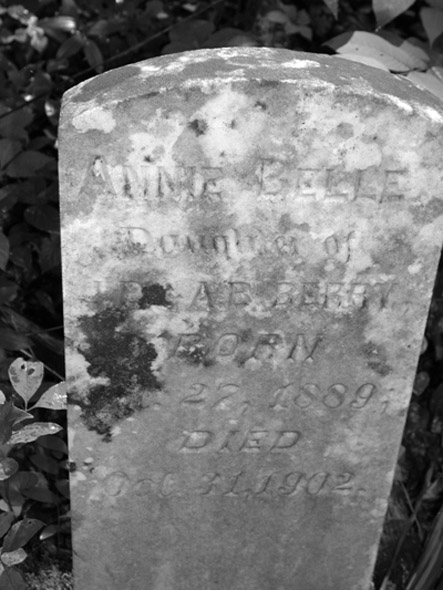
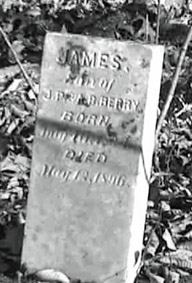
Anne Belle Berry was buried in 1912 and her brother, James Berry, was buried in 1896 in the Fiddleton Cemetery. They are the grandchildren of Thomas Person and Sarah Lunsford Berry. Their Parents were James P. and Artelia Wedding Berry.
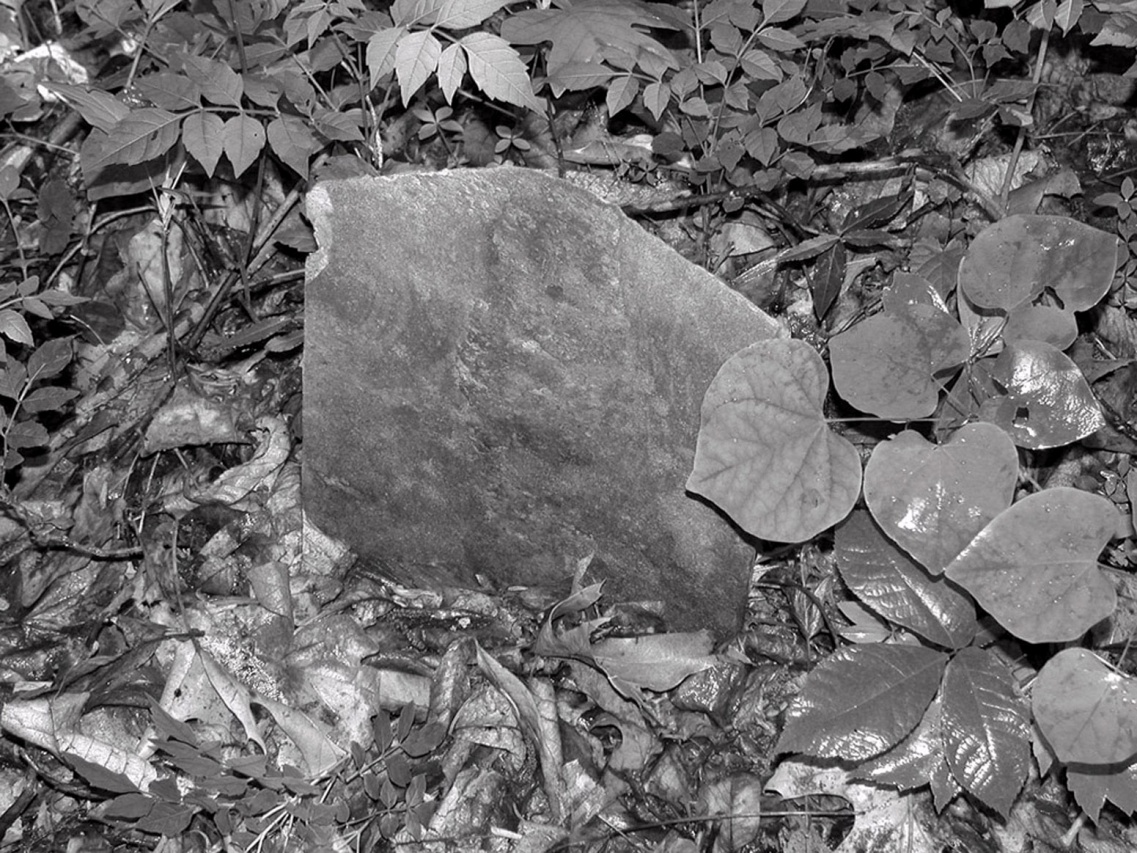
This was the most perfect unmarked stone in the cemetery. This was most likely the headstone for Robert Berry OC. The reason I think this is because Elizabeth Cate Berry would have wanted an appropriate stone for her husband and would have been able to have her slaves make one. This was the only old stone that seemed to be shaped and crafted by hand.
The next adult member of the family to be buried here may have been Isaac Berry.
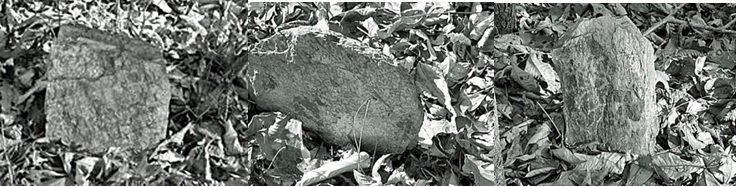
Headstones for two of Thomas Person’s three wives#
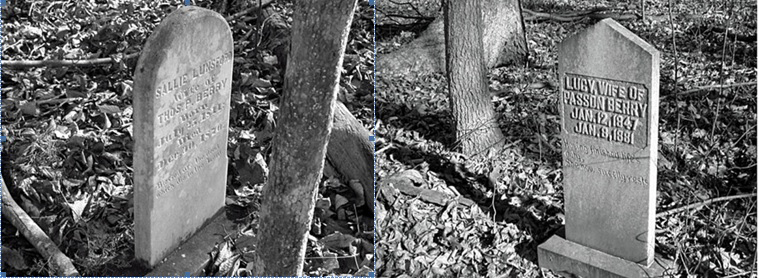
Sallie Lunsford was Thomas Person Berry’s first wife. She is my great-great grandmother. Sallie/Sarah Lunsford Berry was born July 25th, 1811, and died on December 27th, 1870. Sarah and Thomas had four sons. (See page 254) Sarah was 59 years old when she died.
Lucy Brown was Thomas Person Berry’s second wife. There was an error made on Lucy Brown Berry’s headstone. The headstone was placed on Lucy Brown Berry’s grave many years after she died. It was probably placed there by her children. Lucy and Thomas had one son, Daniel, who was born December 23rd, 1880, and Lucy died on January 8th, 1881. Edna H. Berry, the oldest daughter of Thomas and Lucy, was only 9 years old when Lucy died. I have every reason to believe that the young children of Thomas P. Berry thought his middle name was Passon. All records in the North Carolina Genealogy Library refer to him as Thomas Person Berry. I read somewhere that General Thomas Person had the same problem with the pronunciation of his last name. I think that Person as a name sounded like Passon because of a strong colloquial southern accent. Thomas placed the headstone of his first wife, Sarah Lunsford Berry, with the inscription “wife of Thomas P. Berry”. If Thomas had placed the headstone for his second wife, the inscription on Lucy’s headstone would have read “Second wife of Thomas P. Berry”. My own Grandfather Wiley P. Berry thought his middle name was Passon and his Grandfather was Thomas Passon Berry. Person County, NC, was named for General Thomas Person.
When Lucy Brown Berry died, Thomas was left with five children under the age of nine and probably too sick and didn’t have time to deal with placing a headstone for her. The headstone was placed there by some or all of the orphan children many years after her death. When Lucy died on January 8th, 1881, Thomas was left with a new son who was only 16 days old. He also had four young daughters ranging from 4 to 9 years old. Thomas Person Berry’s third marriage to Elizabeth Peed Bowles was a marriage of convenience. He needed a wife to help care for his 5 young children. Thomas was apparently in declining health at the time of, or shortly after, Lucy’s death. Thomas Person Berry died only 38 months after Lucy Brown Berry died. There are no identifiable headstones for Thomas Person Berry or his third wife located in the Fiddleton Cemetery. They are both probably buried there.
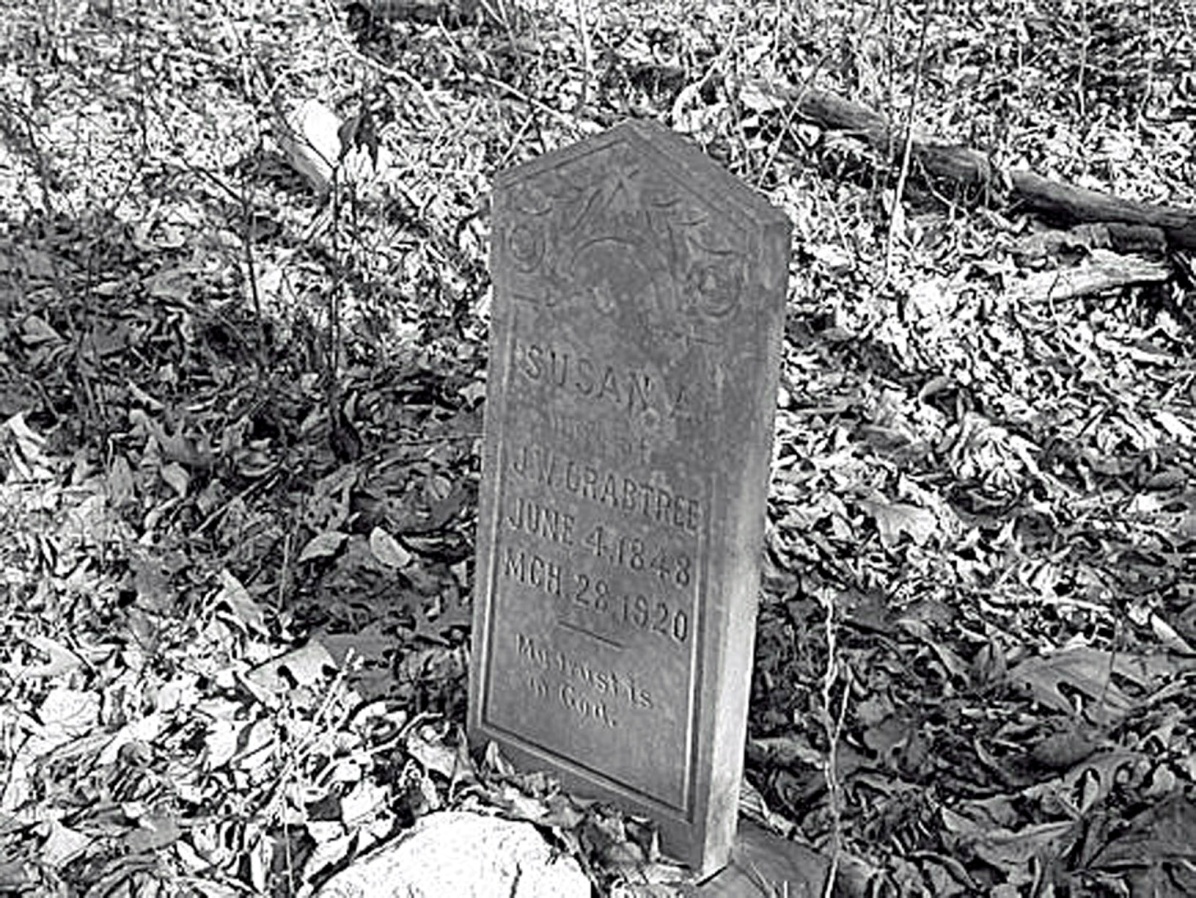
Susan A. Crabtree is the daughter of Thomas and Mary (Polly) King.
Susan was born on June 4th, 1848, and died on March 28th, 1921. Mary King is the wife of Thomas King. (Fig: 121, Pg. 252) They are the couple who inherited the Plantation home that Henry Berry was living in when he died in 1855. Mary was raised by the name Mary Ashley but Susan A. Crabtree’s death certificate states that her mother was named Mary Berry. Mary Berry King was Henry Berry and Fanny Ashley’s daughter. This explains why Thomas and Mary Berry King inherited the Fiddleton plantation home (See support information in Chapter 12, pages 244-253) also (See Fig: 118, Pg., 246) Susan A. Crabtree’s Death Certificate.
Era’s Ending & New Beginnings#
As it happened so often in the early days of our nation, when the parents died it became necessary for many of their children in the family to seek other places to live. Usually one son would inherit the plantation property and the rest had to seek their own farms and plantations. Robert and Elizabeth Cate Berry’s oldest daughter, Mary Berry married James Camp and relocated in Rutherford County, North Carolina, about 1884 and their son, John Berry departed Orange County shortly after he married Martha Stepp on December 16th, 1793, and migrated to Jackson County, Georgia, before 1800. Thomas and William Berry had gone to Tennessee to search for land to homestead in 1807 or 1808. Robert Berry Junior and his son, George Berry, went to Fayette County, Alabama, a few years after Robert Berry and Elizabeth Cate Berry died. The land in Fayette, Alabama, was made available by the federal government to veterans of the Revolutionary War and the War of 1812. Robert Berry Junior was a veteran of the Revolutionary War and his son, George Berry, was a veteran of the war of 1812. Robert Junior and his family removed to Fayette County, Alabama, in 1822. David J. Berry and his family were in Georgia by 1830. Joshua Berry’s son, James Berry, migrated to Smith County, Tennessee, between 1836 and 1839.
At one point in time the great wagon trail that led through Salisbury, North Carolina, to South Carolina, Georgia and Alabama was experiencing over 1000 wagons a day headed toward the new territories. It has been said that the dust from all the wagons created a dust storm every day. The fact is that all of these young families who were coming from Orange County together and relocating in new communities makes it possible for us to locate and identify our ancestors.
Robert Berry’s service in the Revolutionary War qualified his sons and grandsons to be eligible for land grants in Tennessee. We also know that one of Joshua Berry’s sons, James Berry, (See Page 159) was able to acquire land in Smith County, Tennessee, around 1825 because of his grandfather service.
There were several good reasons to migrate to the west. Cost of land at home was expensive; much of the nutrients in the fields back home were depleted, the federal government was making land available as an incentive to populate the new territories in the West. They were doing this by making the land very cheap and that plan worked very well. Gold had been discovered in some of the Western states, which was another incentive to migrate. The second migration consisted of a lot of young families and few single men, unlike the first migration in the mid 1700’s.
Henry Berry, the youngest of Robert and Elizabeth Cate Berry’s children, was born in 1776, the year of the Declaration of Independence. Henry was the only child who was born in the United States. All of their other children, who were born in North Carolina, were born in the English Colony, under English rule. Much of this time Orange County, North Carolina, was considered the Western Frontier. Five of Robert Berry’s grandsons and their families relocated to new frontiers. By the year 1870, there were many more of Robert and Elizabeth Cate Berry’s descendants living in Georgia, Alabama, Texas, Mississippi, Kentucky, Ohio, and Tennessee than there were in Orange County, North Carolina. This pattern continued for Robert Berry’s OC descendants for many more years. As the great southwest and the great northwest frontiers were opened, many of our Berry family pioneered those lands, too.
As unclaimed land was becoming available in the West, it seems our family always had a new crop of Berry descendants ready to load up the wagons. It was not just our family, but countless other families were taking advantage of these opportunities, also. After the land grants disappeared, many of our family members relocated to new cities where jobs were available. The 1928 crash caused many people to seek jobs in other parts of our country. My mother and father were married in 1928 and only made a short move from Hillsborough to Raleigh, N.C., which was about 50 miles.
Wagons South Wagons West is a book written by Victor Glenn Berry. I think Glenn named the book very appropriately. Although the book was primarily written about only one of William and Hannah Cate Berry’s sons and his family, Glenn Berry’s book goes into a lot of detail about the migration of some of our ancestors.
Picture of Robert Berry Descendants at the 2007 Reunion#
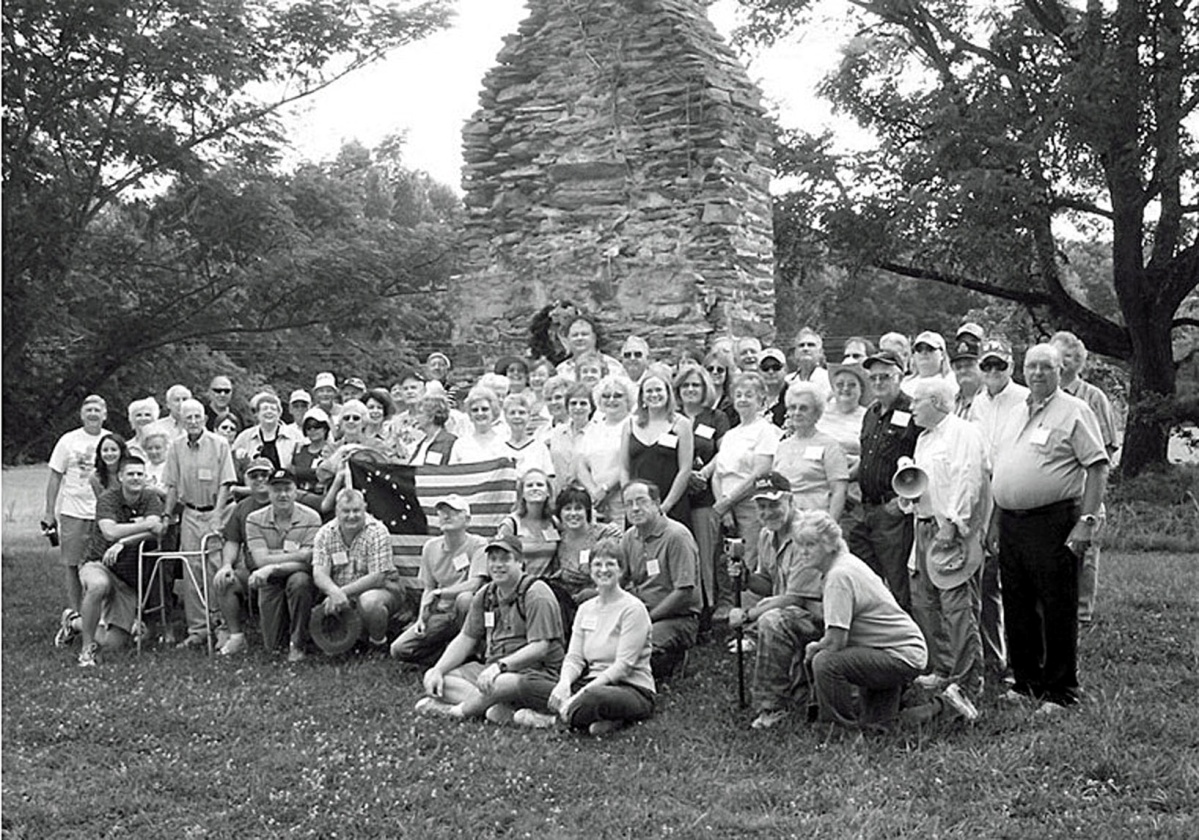
We gathered in Hillsborough, North Carolina, on Thursday, July 19th, and on Friday, July 20th, 2007. We spent the day in the 256 year old city of Hillsborough, North Carolina. William Churton laid out the streets that have never been changed, other than resurfacing them with modern materials. There were two reasons I chose these dates for our Fiddleton Reunion. My mother was born on July 20th, 1908, and Robert Berry OC was granted his Granville Land Grant on May 12th, 1757. On Saturday, about 70 of us explored the original Granville Land Grant property. We visited the Fiddleton Cemetery where Robert and Elizabeth Cate Berry are buried. All of the out of state cousins were staying in the Holiday Inn Express in Hillsborough. We rented the conference room where all of our cousins could there set up laptops, displays, pictures, documents, family albums, and share individual stories about our own Berry family lines with each other. We also formed groups to visit the Register of Deeds Office, where we could view all of the old deeds and assorted records. The Orange County deed books date back to 1750, the grooms and brides books dating back to 1785. Both of these records were very popular attractions. We had a golf cart which made it possible for the less mobile cousins to visit the cemetery. We visited Berry’s Grove Baptist Church, where many of Robert Berry’s North Carolina descendants are buried. John Robert and his wife, Elizabeth Frances Bowling Berry, gave the land to the Church. John Robert Berry is a great-grandson of Robert OC and Elizabeth Cate Berry.
After spending Saturday morning visiting all the points of interest, we motored to the Schley Grange Hall, where we had a dinner of North Carolina southern pork Bar-B-Q. Schley is about halfway between Fiddleton and Hillsborough. There were a total number of 116 Berry family members who attended the reunion dinner on Saturday at the Schley Grange Hall. Many pictures were taken with still cameras and video cameras. On Sunday, we all said goodby. I had many favorable comments about this special reunion and everybody really enjoyed returning to their roots. This was a once-in-a-lifetime event and can never be repeated for many reasons.
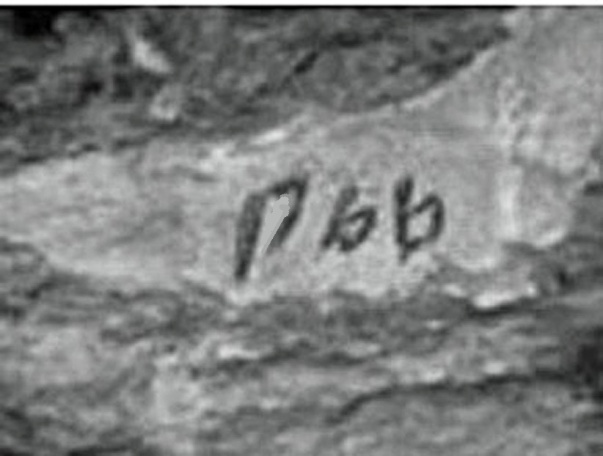
1766 is the date scratched in the mortar between two stones on the rear of the chimney. (Figure 38) Robert Berry OC very likely scratched this date on the chimney, or maybe Henry Berry did it after he inherited the Plantation house in 1814. We colored the date with black chalk so the date would show up better in pictures This chimney should be declared a national historic treasure because it was constructed in the English colony of North Carolina 10 years before this country became a nation. The GPS location of this chimney is: 36°13'26.36"N 79° 1'31.82"W.
Number of Berry Family Households in America#
This chart shows a couple of interesting facts that should be noted.
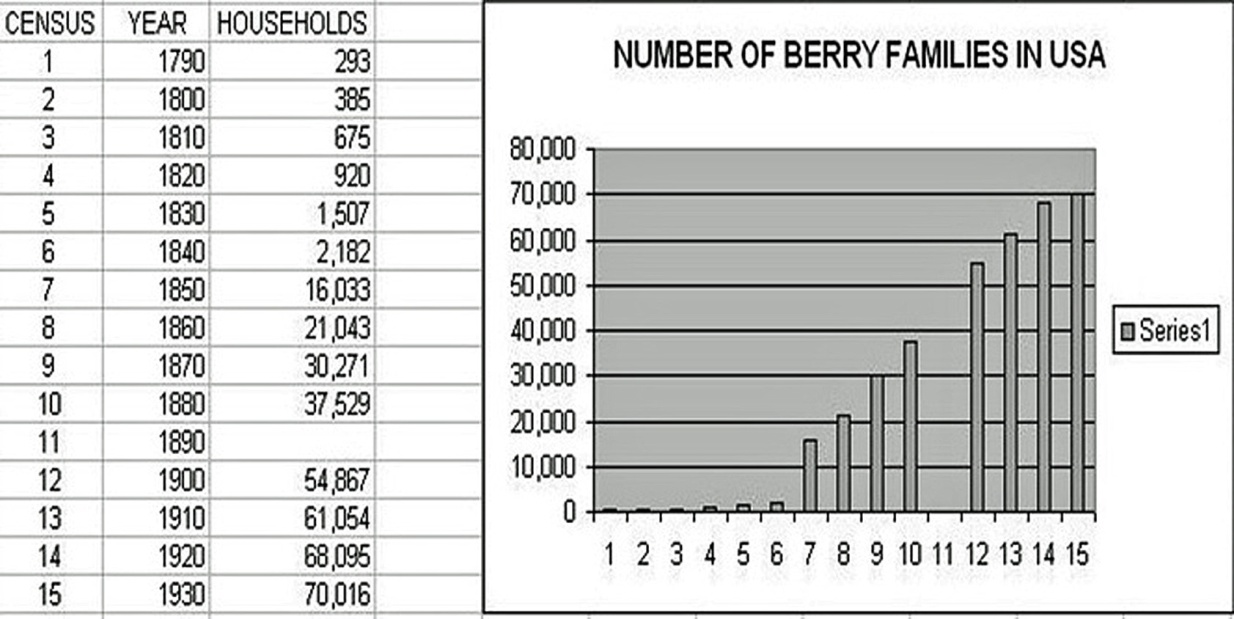
There were very few Berry families in America until about 1850. The number of new Berry households increased by only 92 in the 10 years from 1790 to 1800. Four of our Robert Berry’s OC children (Joshua, David, William, and Thomas Berry) account for four of these 92 new Berry households.
In the 1850 US Census, there was a huge increase in Berry households in America. The majority of these new Berry families were coming from Ireland as a result of the potato famine.
From the table below, you can see there were 2182 Berry households in America in 1840. Ten years later in 1850, there are 16,033 Berry households in America. That is an 800% increase in ten years, amounting to about 1400 new Berry households each year.
DISTRIBUTION OF BERRY HOUSEHOLDS IN THE ORIGINAL 13 COLONIES